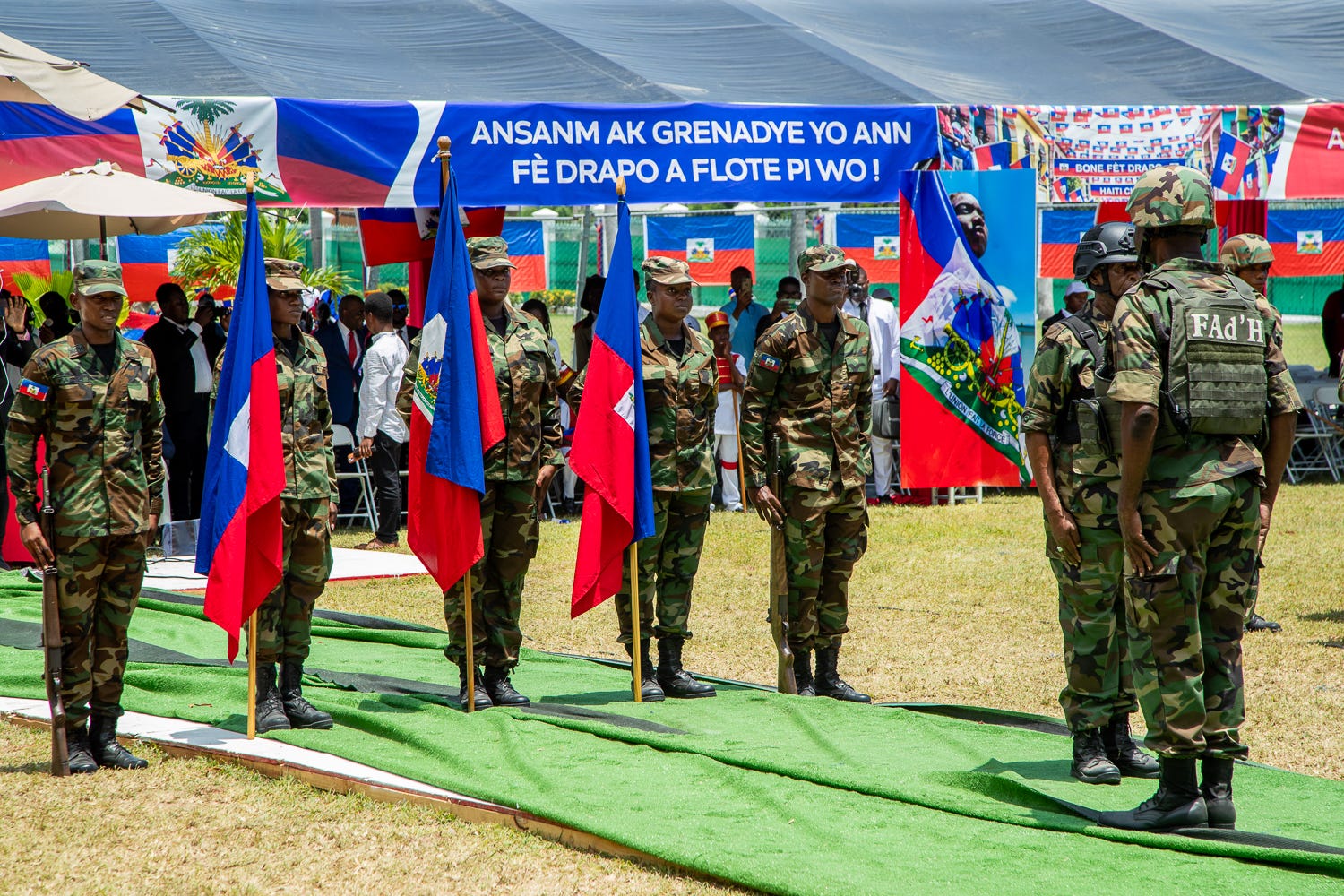
The Haitian flag, sewn in 1803 by Catherine Flon to symbolize unity among people of mixed ancestry and Blacks, remains a source of pride. Despite ongoing debates, the celebration, led largely by schoolchildren across the country, shone brightly once again this year. All that and much more in issue #64 of HAITI WEEKLY, by DÈYÈ MÒN ENFO.
Table of Contents #64
The Haitian Flag Celebrated at the Presidential Palace
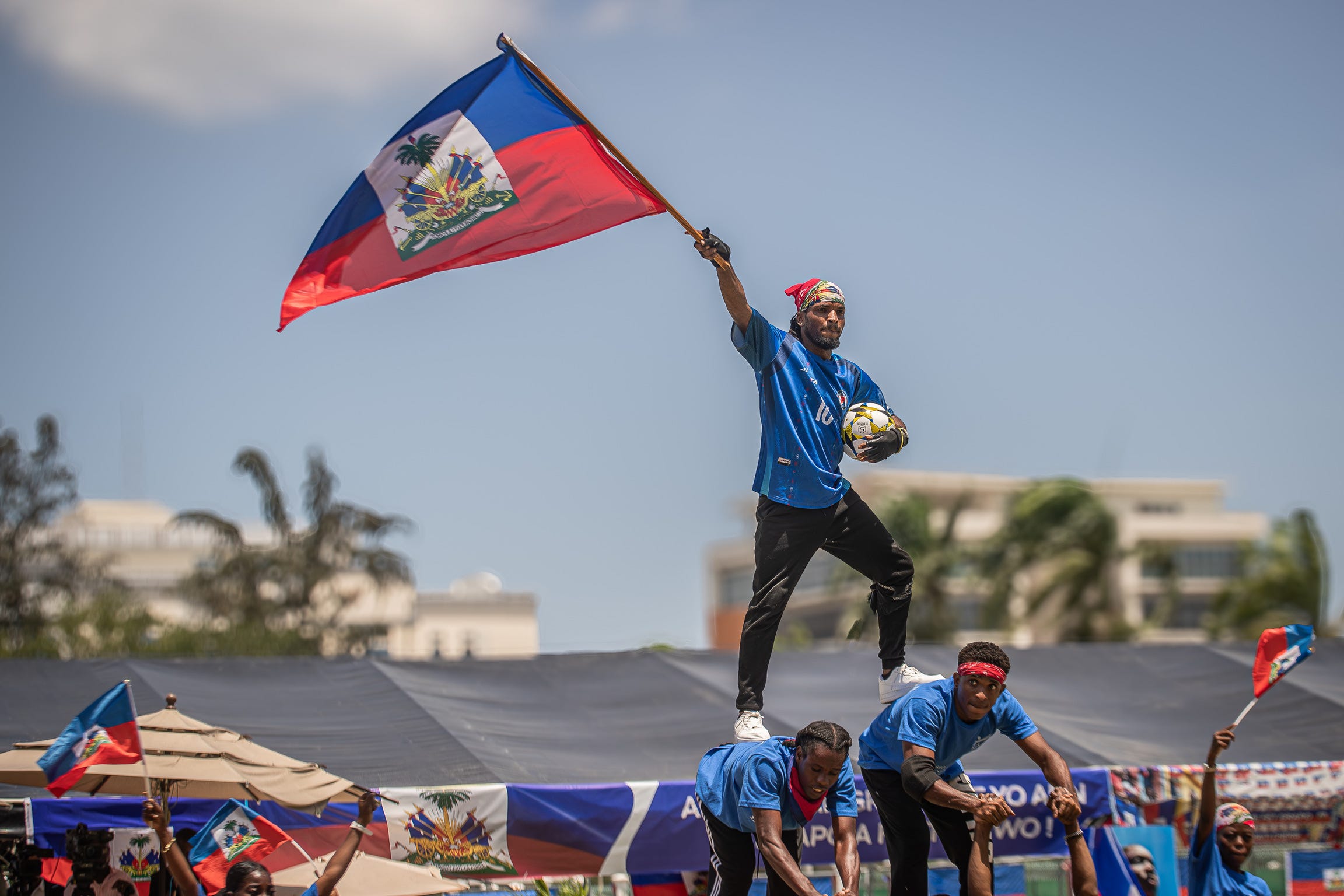
On May 18 each year, Haiti celebrates Flag Day, a chance to revisit the roots of the first truly free republic in modern history, which declared independence in 1804. Previous attemps by France and the United States to establish republics were still grounded in slavery, debying citizenship and basic rights to Black and mixed‑race people. Thus, the enslaved people’s uprising on the island of Hispaniola was a slap in the face to Western powers. For more than a century, they tried to stifle Haiti’s development, fearing it would inspire other colonies to pursue independence.
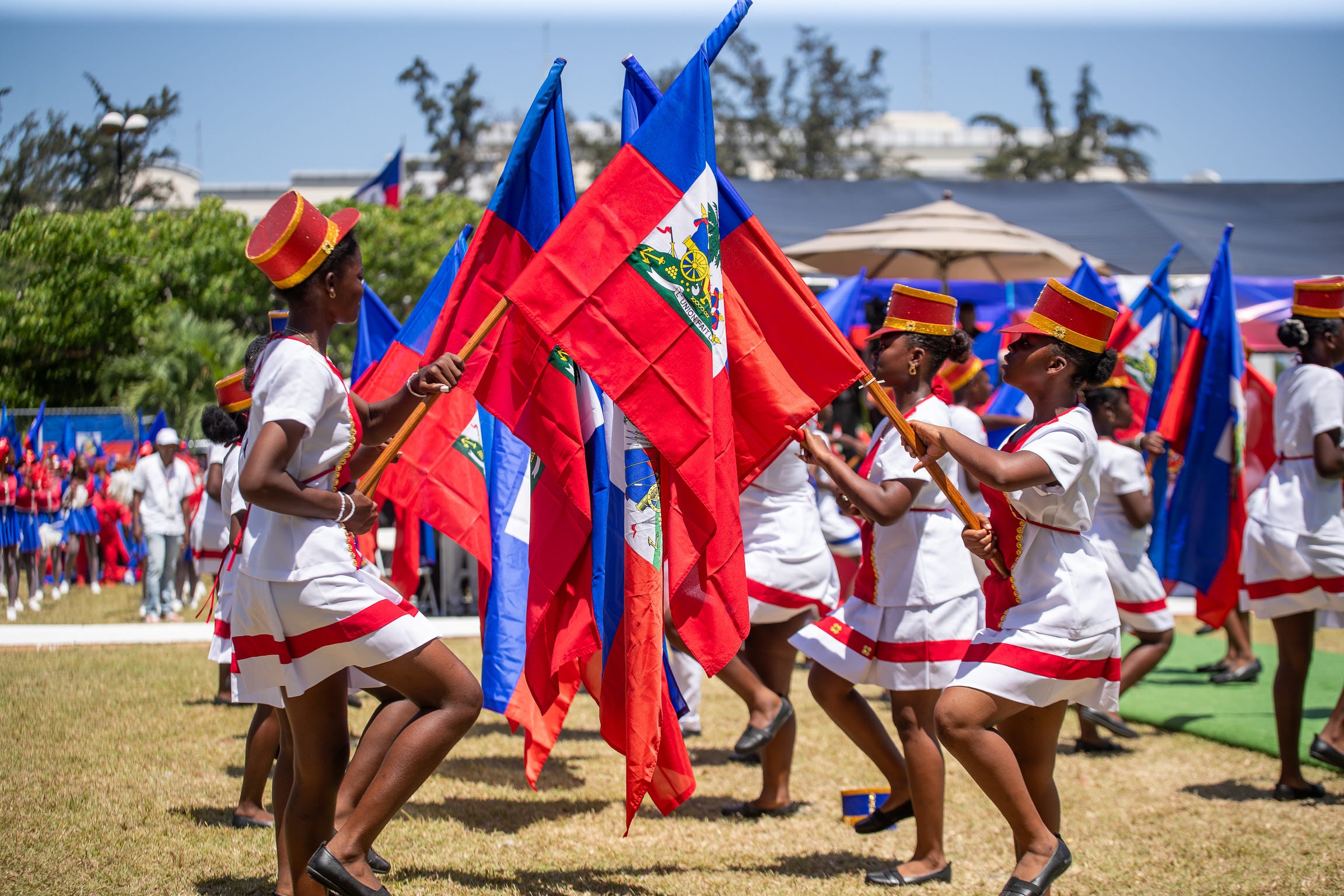
The government’s official celebrations drew particular attention this year because they were held on the grounds of the Presidential Palace, which is located closed to a downtown area that is still marked by conflict. The goal was to show that the Champ-de-Mars area is safer now thant it was before.
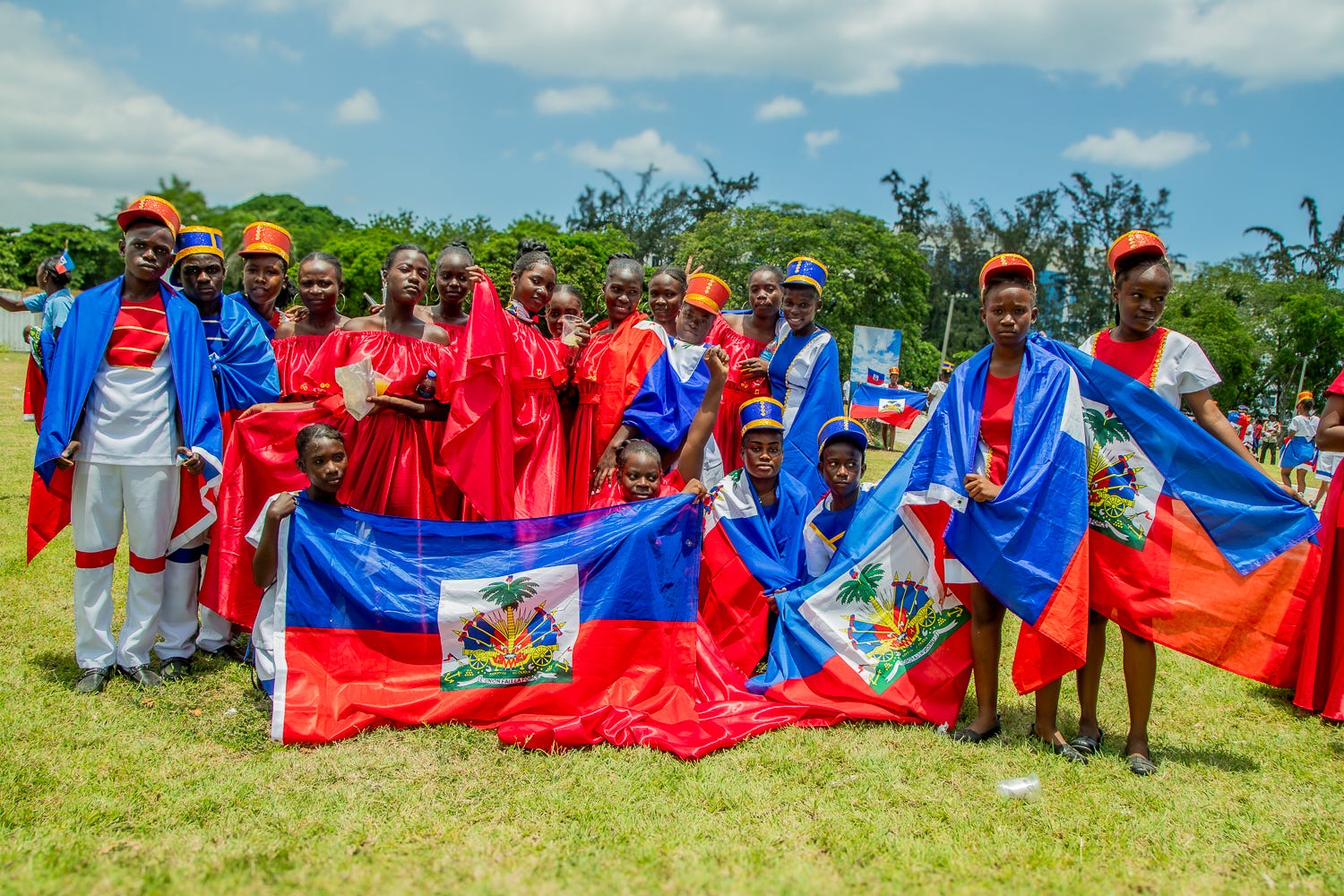
Still, the authorities’ modest gains in central Port‑au‑Prince—small compared to the vast territory still under the control of armed criminal groups—were overshadowed by abuses in the south of the Artibonite region and new clashes north of the airport in Port‑au‑Prince, which reportedly left hundreds dead. Several critics have pointed this out over the past week. Why hold a lavish ceremony in a war-torn country?
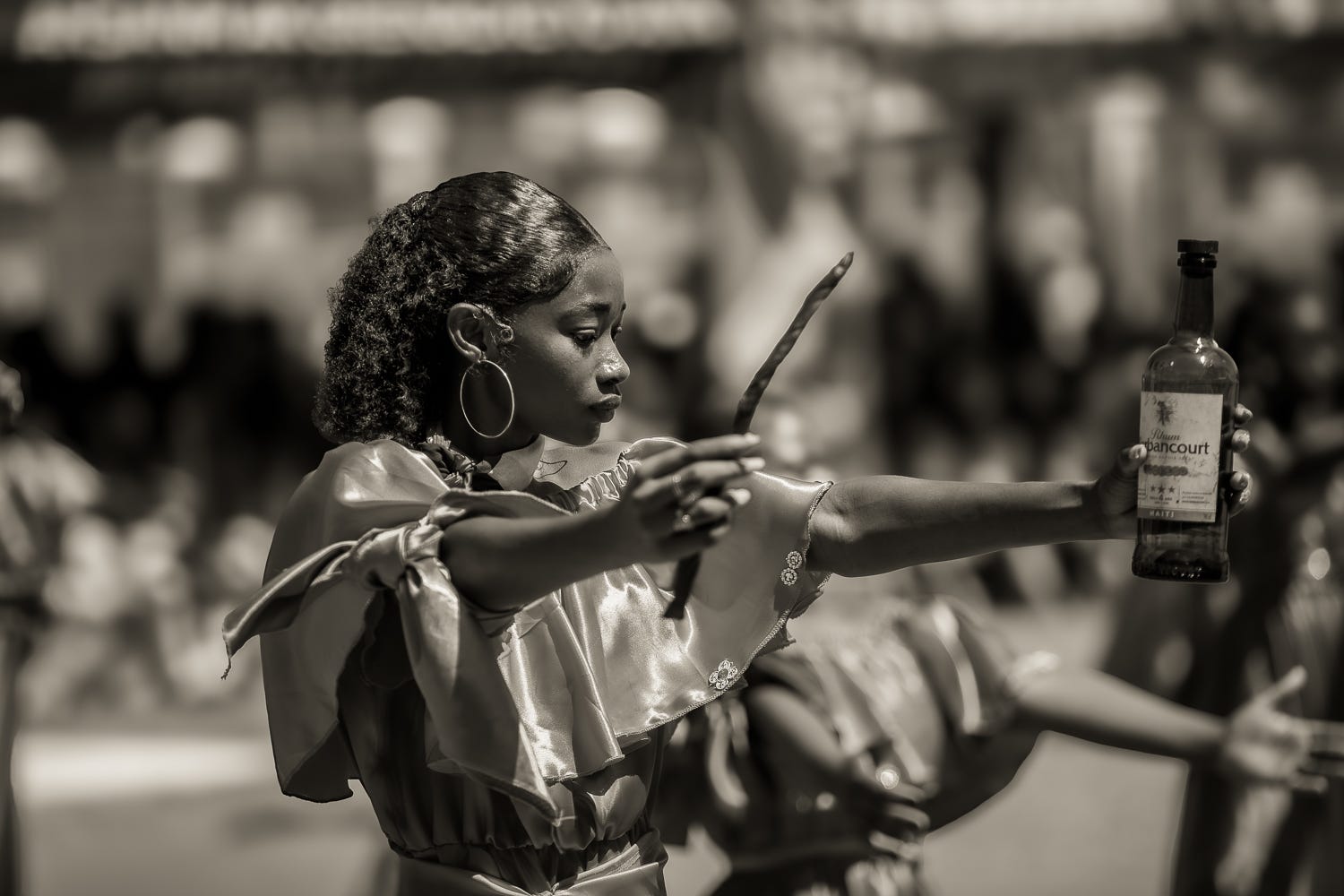
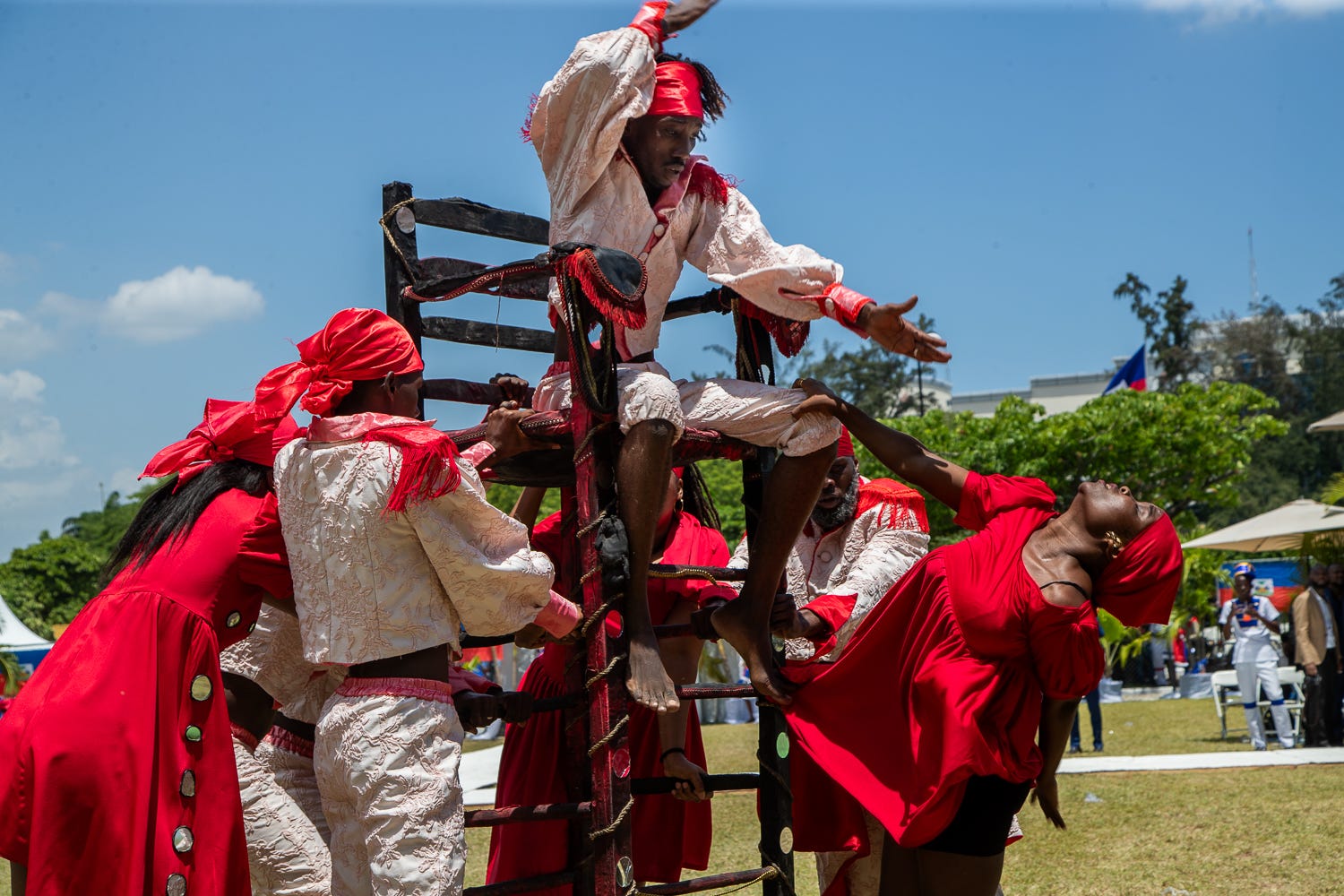
During the government ceremony, members of Haiti’s new army mingled with young people from dance troupes, historical reenactment groups, and Vodou organizations. Haitian Vodou culture (photos above and below) is deeply intertwined with tradition and the early stages of the revolt against slavery in the late 18th century, a struggle that led to the country’s independence.


The interim prime minister of Haiti used the occasion to unveil a new stamp honoring the Haitian national soccer team. The team’s qualification for the 2026 World Cup has brought the whole nation together. Haiti last qualified for the World Cup was in 1974. As a symbol of passing the torch, Mario Léandre, a member of the 1974 squad, handed a flag to Woodensky Pierre, the only player on the current team playing for a Haitian club.
The event also gave Haiti’s armed forces (FADH) the opportunity to demonstrate their ceremonial expertise. Reestablished in 2017, the force has expanded every year since. Some view the growth of the force as a response to current insecurity, and recruitment has continued.


The troops were presented in formation and accompanied by a marching band. There was also a reenactment performed by actors depicting Haiti’s army during the time of the revolution.


Painting to Rebuild
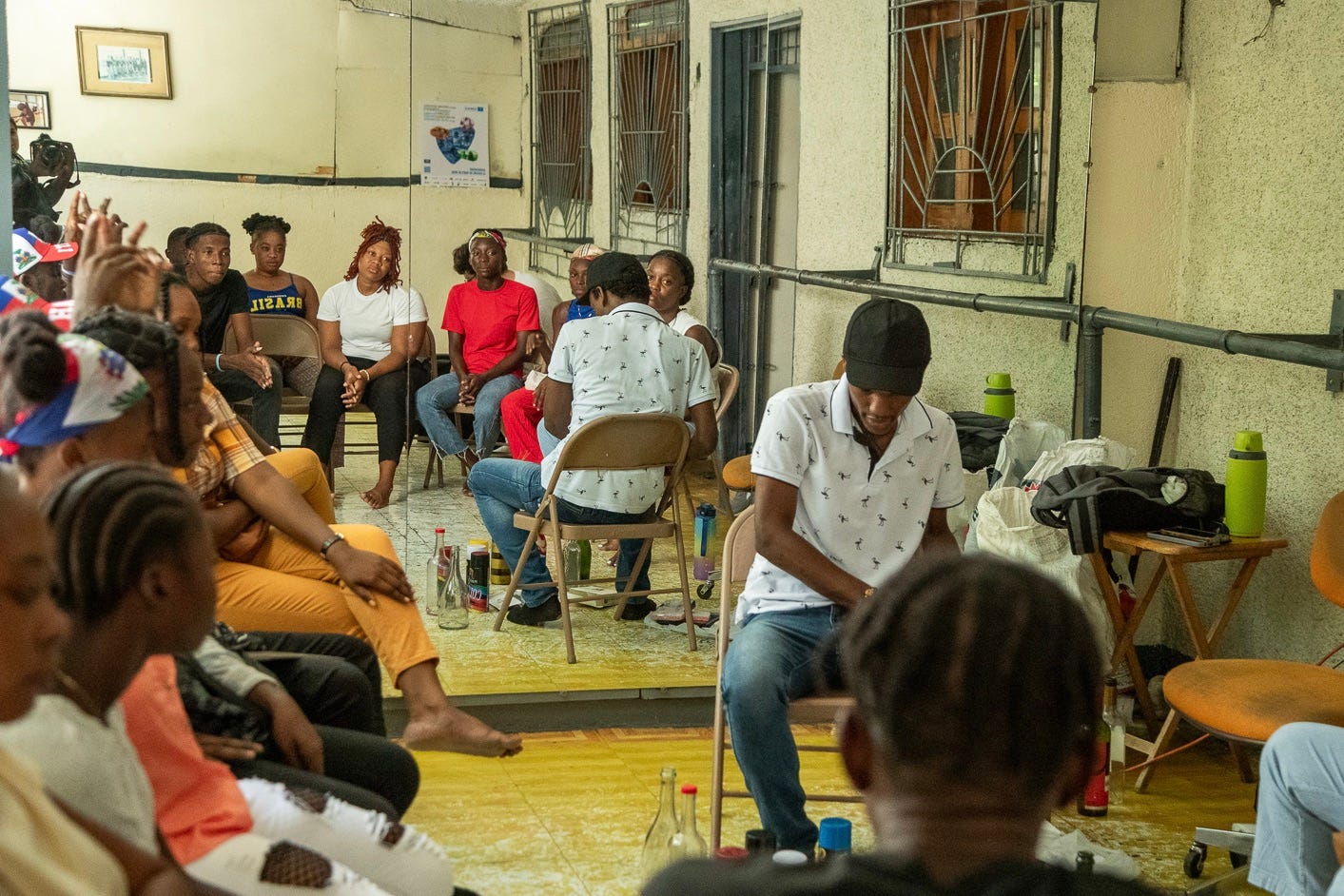
A bottle‑painting workshop, rooted in Haitian tradition, was held for young people living in camps at the Tchaka Danse facilities in the Port-au-Prince’s Bourdon neighborhood. This initiative by the Maurice Sixto Foundation is part of a program that will include forum theater, dance workshops, and psychosocial support. The program launched on May 11 and will continue through the end of next month.


Music Video of the Week
Viral - Wa Dodo feat. Trust Halla Halla + Gogo Chen Rigòl
Wa Dodo, Trust Halla Halla, and Gogo Chen Rigòl walk through a shantytown, criticizing the current situation in the capital between games of lido [parcheesi] and phone‑charging service. It’s rare to see a music video this raw and realistic, with barbs aimed in every direction. The song celebrates working‑class people, talented children, and Haiti’s national soccer team while mourning those forced to flee their homes because of the fighting.
While it may not be one of the most popular videos right now, its authenticity and political significance make it one of the most striking songs, both for its lyrics and its cinematography.
Cité Soleil: Downtown in Celebration, the North on Alert
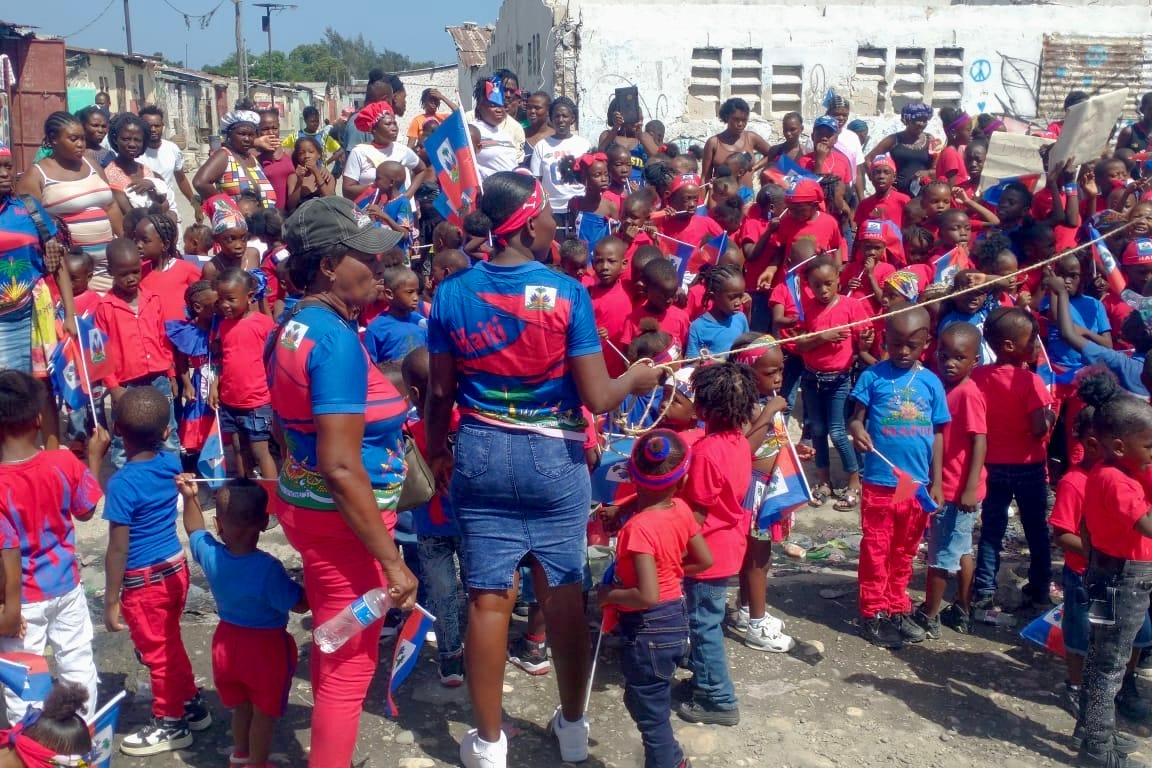
Flag Day is a day for young people across the country to celebrate—and Cité Soleil was no exception. Dressed in red and blue, children from the community marched through the streets with their parents and educators to celebrate a day that unites the country’s diverse political views.
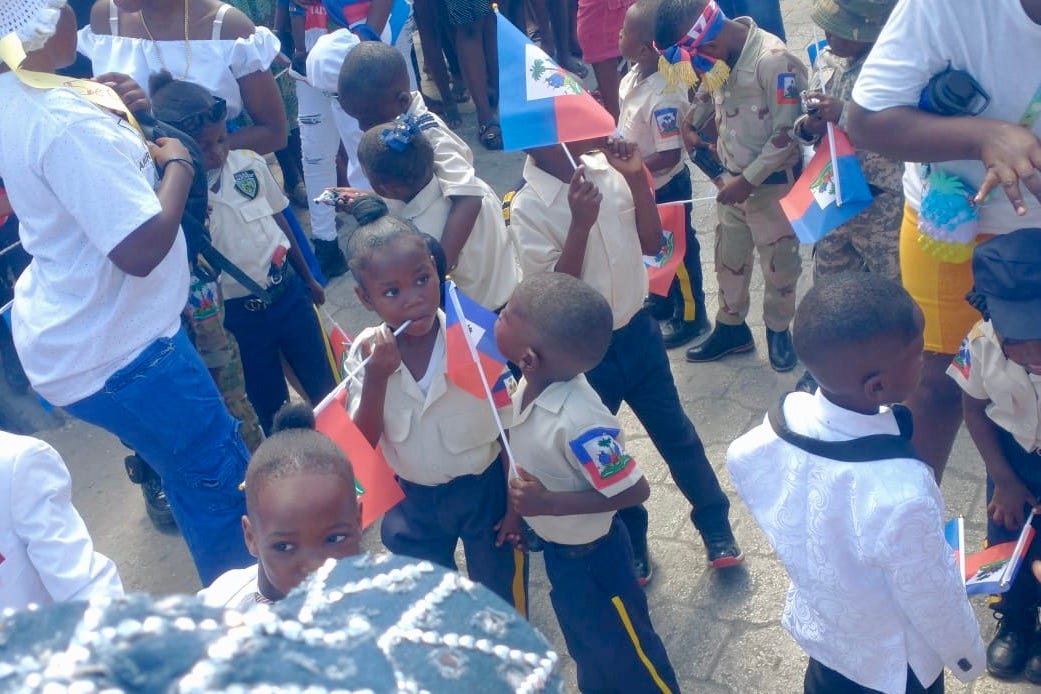
Some young people were seen wearing police uniforms in the community. These photos were taken in the Brooklyn neighborhood of Cité Soleil and contrast with the ongoing clashes between factions associated with the armed criminal group G9 and those associated with G‑Pèp in the northen part of the area, as discussed in the last issue of HAITI WEEKLY. According to the International Organization for Migration, these confrontations have forced nearly 20,000 people to flee their homes.
DÈYÈ MÒN ENFO’s team
Photojournalists: Francillon Laguerre, Sonson Thelusma, Andoo Lafond, Milot Andris, Patrick Payin, Ketlain Difficile, Steeve Saint Fleur, Clarens Siffroy
Community manager: Steven Andris
Editorial board: Etienne Côté-Paluck, Jean Elie Fortiné, Jean-Paul Saint-Fleur
Interns: Wilky Andris, Donley Jean Simon
Special collaboration: Stéphanie Tourillon-Gingras, Mateo Fortin Lubin, Dickens Lundi
Media partners: Centre à la Une, J-COM, Nord-Est Info
Institutional partners: Kay Fanm, Mouka.ht


How Does Your Contribution Help?
Your monthly (or yearly) support helps to finance the production and pay the salaries of the DÈYÈ MÒN ENFO staff in the communities of Cité-Soleil, Port-au-Prince and Cayes-Jacmel. In addition, donations are regularly distributed for medical expenses, school fees and other emergencies in these communities.
Press Reviews
Press Review — Culture
Haiti’s pavilion at the Venice Biennale - Le Nouvelliste
“Résonances” to heal the wounds caused by violence - Le Nouvelliste
Ayiiti and Boukman Eksperyans: bringing the 2026 World Cup to life with legendary Haitian sounds - Le Nouvelliste
Festival Goûter littéraire for a deep reflection on rural Haiti - Le Nouvelliste
Press Review — Film
Gessica Généus and “Marie Madeleine” conquer the 79th edition of the Cannes Film Festival - Le Nouvelliste
The city of Jacmel moves to the rhythm of the “Festival du film de l’amitié” - Le Nouvelliste
Press Review — Heritage
Gonaïves: between memory, spirituality, and patriotism, many activities marked Flag Day - Le Nouvelliste
Haiti — May 18, Flag Day: the Prime Minister calls for national unity amid armed violence in Haiti - AlterPresse
Haiti: when May 18 becomes a soul-searching moment - AlterPresse
223rd Flag Day: “The youth parade, living memory of the Bicolor” - iciHaiti
18 me: between memory, pride, and national disillusionment - Centre à la UNE
Tribute to Catherine Flon, mother of the Haitian flag - Le Nouvelliste
Press Review — Media
Haiti — Media: a photographer found dead in Les Cayes; two journalists die within days - AlterPresse
Press Review — Gender and women’s rights
presented by KAY FANM
Singer and former host Luck Mervil convicted of sexual assault in Canada - Centre à la UNE
Artibonite: in Makabon, Haitian midwives on the front line against cervical cancer - Le Nouvelliste
Nadia Geffrard and four other Haitian women honored by Acash - Le Nouvelliste
Haiti — gender-based violence: nearly 2,000 cases recorded between January and March 2026 - Alterpresse
Haiti: dismissal of the Director General of the Ministry for Women’s Affairs - HaitiLibre
Haiti’s women’s groups denounce replacing woman with man - Miami Herald