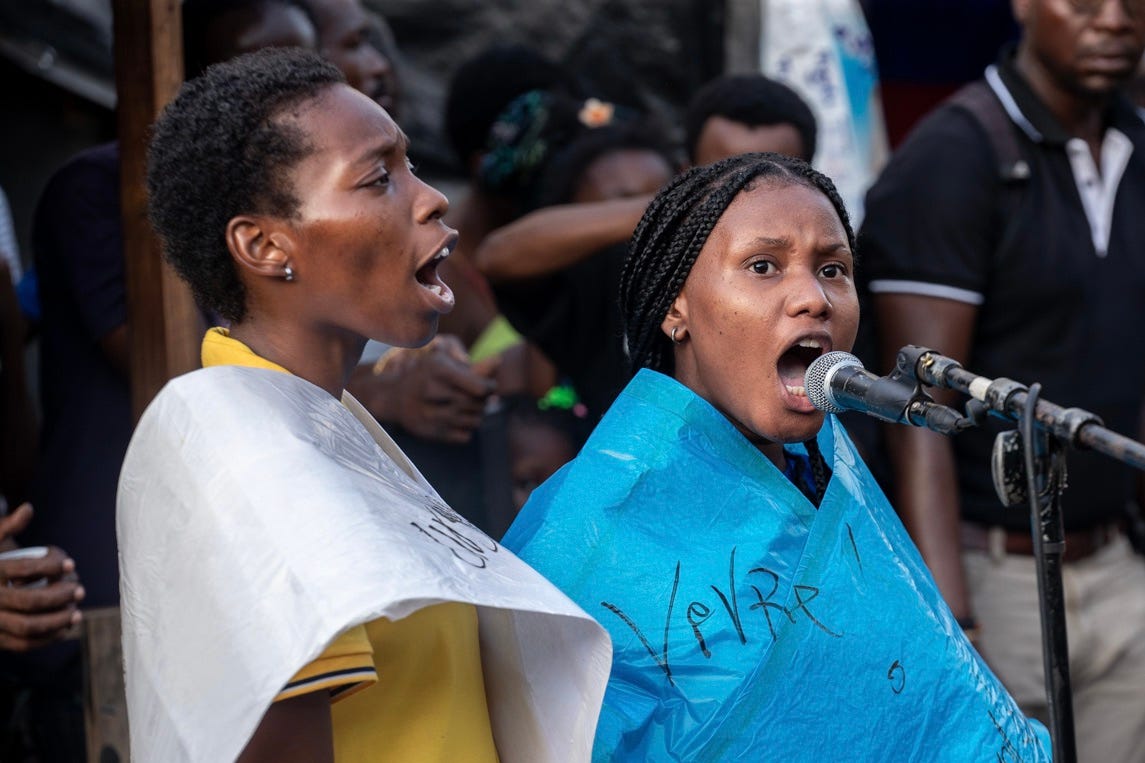
Poetry became a call for life to return to downtown Port-au-Prince, carried by young people living in displacement camps and by artist Ricardo Boucher. All that and more in issue #67 of HAÏTI MAGAZINE by DÈYÈ MÒN ENFO.
Issue #67 Summary
Displaced Youth Make the Call to Return Resonate
Celebrating Locks, Challenging Prejudice
This Week’s Music Video - Pye Sòl by Woolens Strong and Dutty
A Fragile Lull, but Kidnappings on the Rise
Press Reviews
Displaced Youth Make the Call to Return Resonate
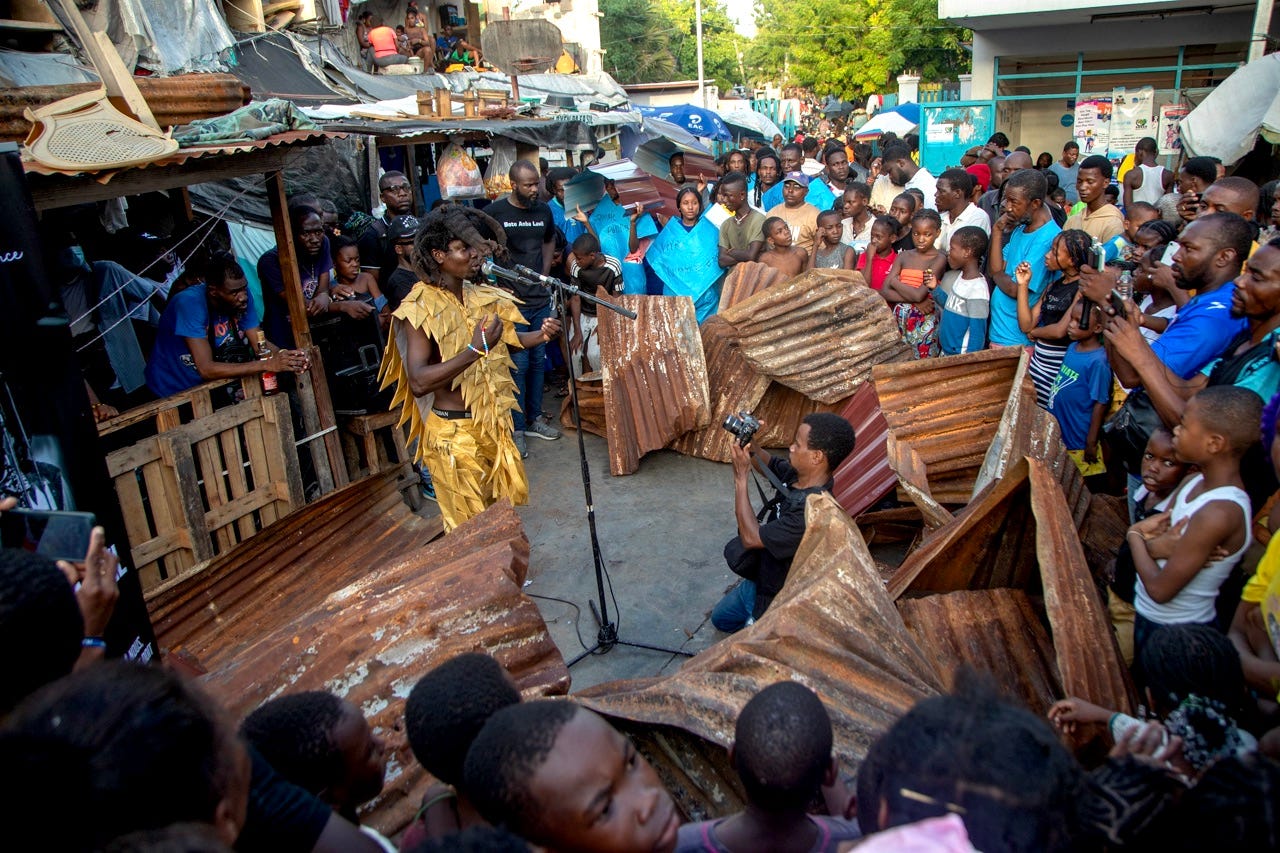
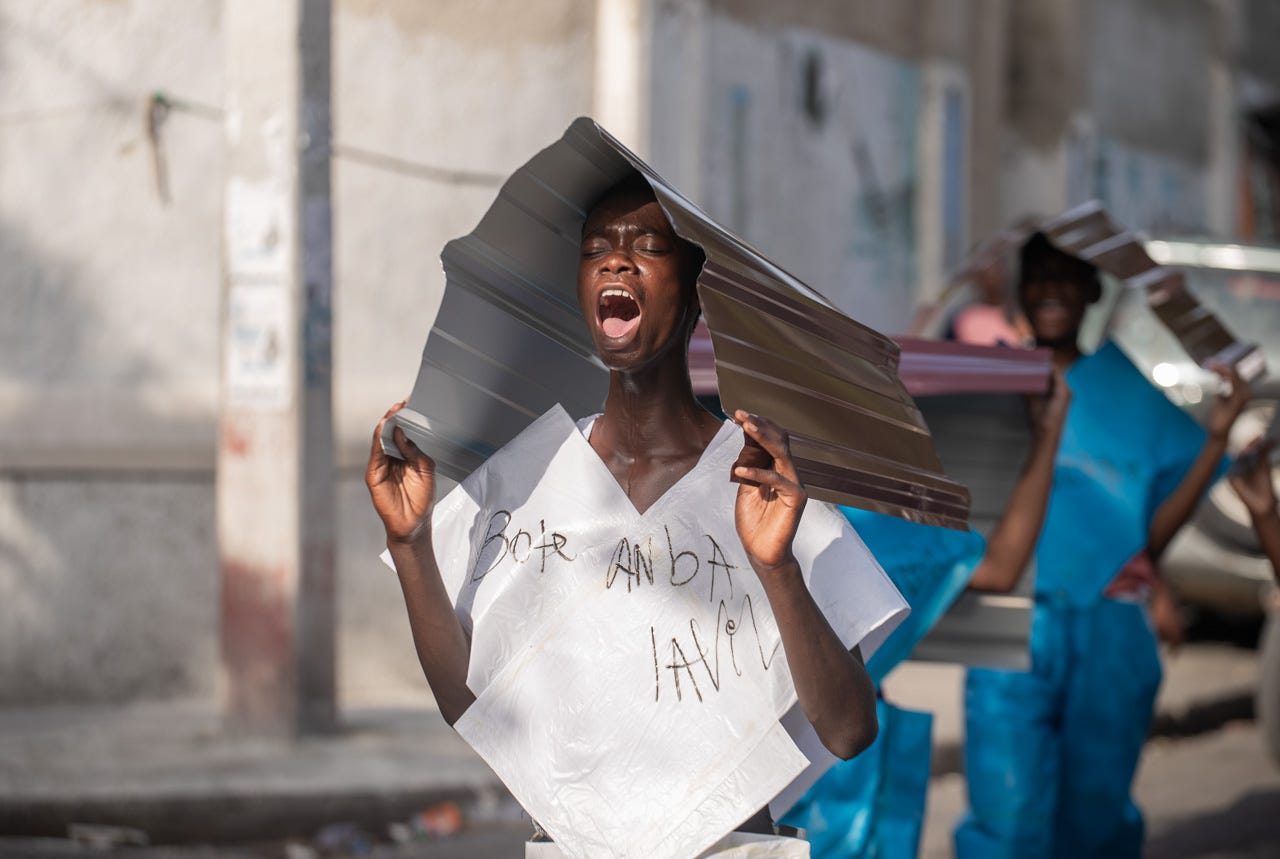
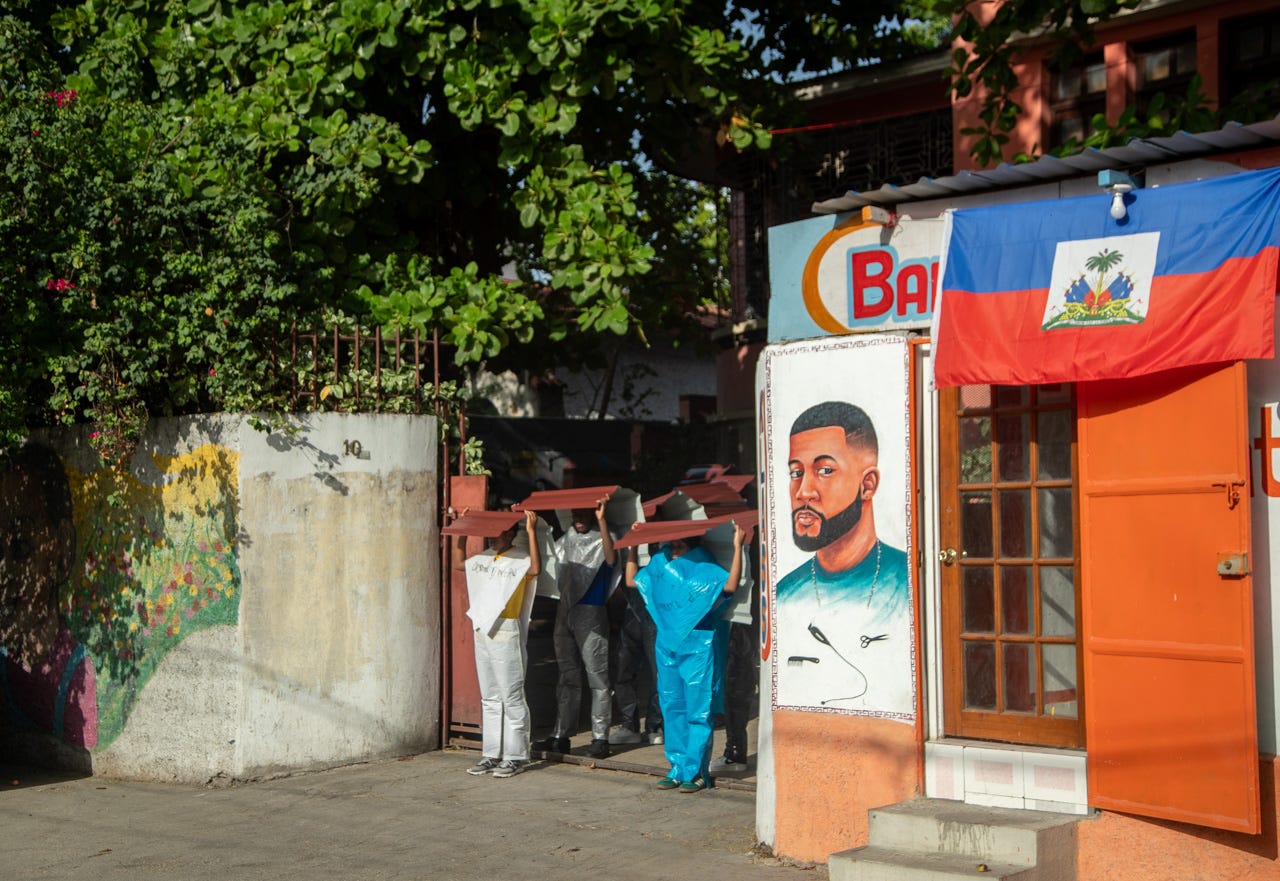
A week-long training session with young people living in displacement camps culminated late last month in an artistic performance calling for life to return to downtown Port-au-Prince. Chanting “Live” at the top of their lungs, the presentation began with a march and ended with a performance at the Lycée Marie-Jeanne camp in Port-au-Prince. It was meant as a call for peace and a celebration of everything that once made up the heart of downtown, often called the lower part of the city.
The event, Bote Anba Lavil, takes its name from an expression popular among merchants who carry their goods “down to the lower city.” With its many markets, the area was considered the country’s economic heart until, two years ago, armed conflicts forced many residents and merchants to leave.
“I’ve always liked reciting poems, but I’ve really improved the way I express myself, and my shyness is starting to disappear thanks to this training,” explains Blandina, 17, who took part in the event. She lives in a camp in Bourdon.
“I used to do a bit of slam”, adds her colleague Edna, “but I was always a little shy. Now, with the workshop, I know how to speak in public and articulate well.”
Edna, who has lived for the past two years in a displacement camp, had also taken part last year in the first edition of these training sessions.
“The workshop completely changed my life,” she says.
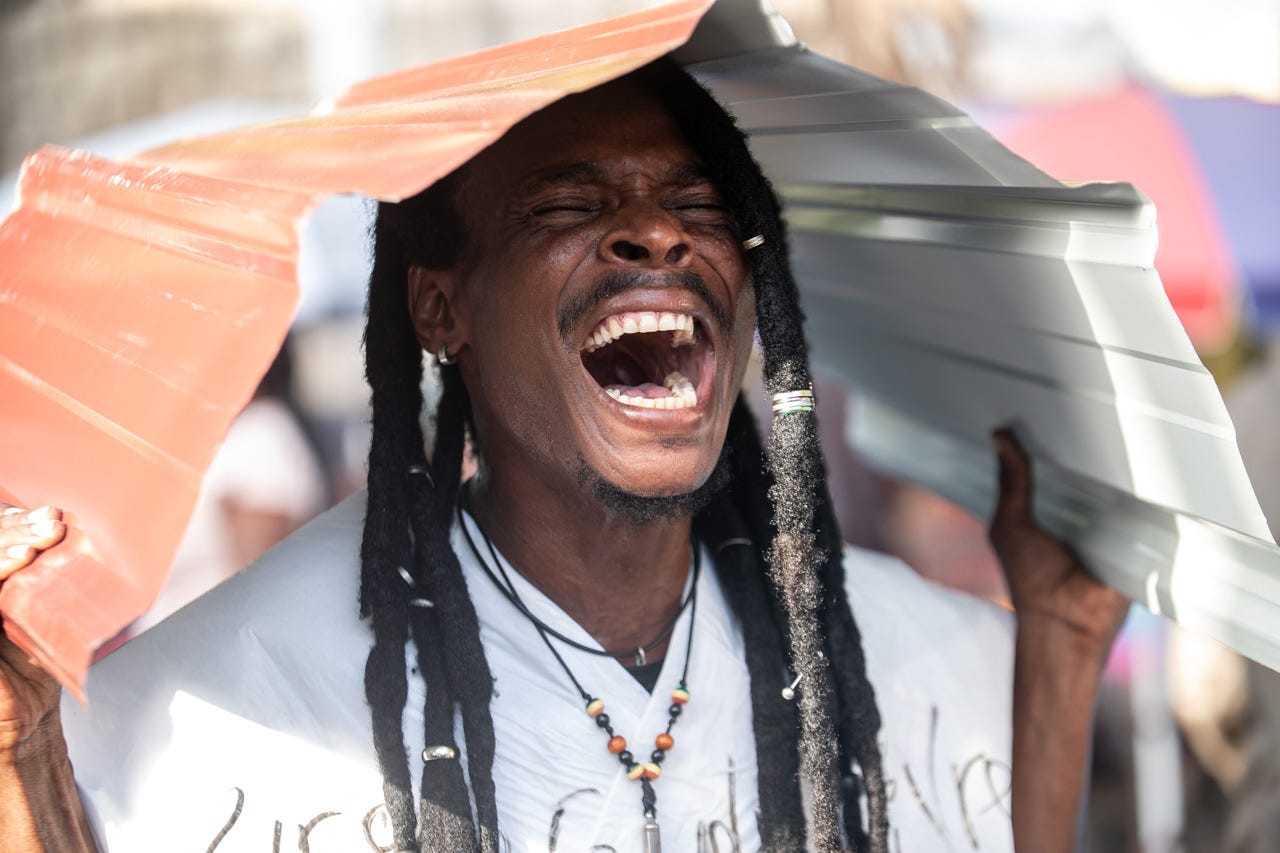
Artist and poet Ricardo Boucher, who initiated the project and led the training, tells HAÏTI MAGAZINE that the project reflects “a popular rage, anger and a form of resistance,” “I’m a Port-au-Prince guy. I was born and grew up here. My parents also sold goods at Croix-des-Bossales and the Salomon market, among other places.”
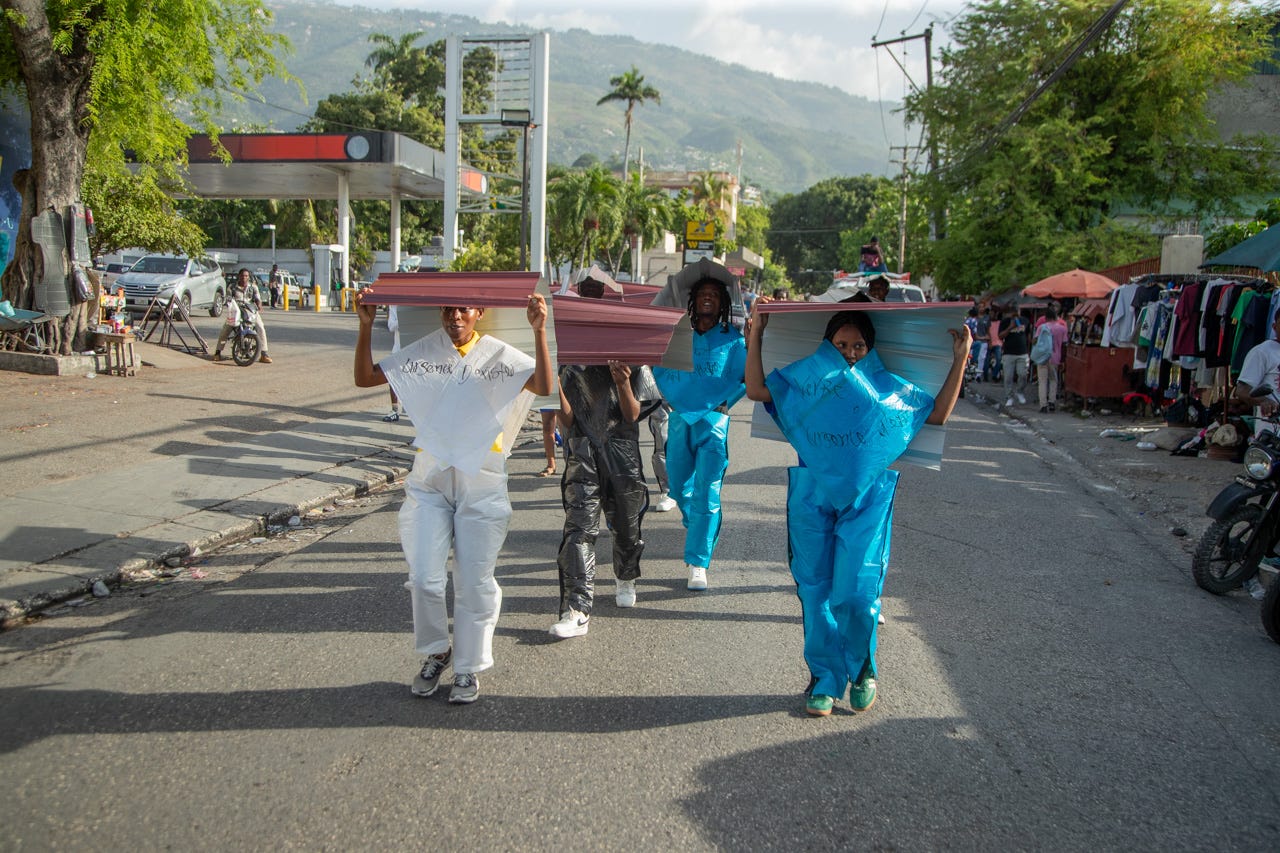
“The downtown area has disappeared, it is no more.” he adds. “All these places are lost. This whole set of spaces made Port-au-Prince what it is, and they are disappearing.”
More than an economic lung, downtown Port-au-Prince was also central to social life, with its churches, cathedral, educational institutions and many markets. “At Croix-des-Bossales [the country’s largest market before the conflict], the way the merchant women called out to sell created a cacophony, but also conviviality, a sense of communion.”


The downtown area was a kind of lung for Port-au-Prince. “Today, we wonder what happened to the beauty of this city. What happened to the beauty of downtown Port-au-Prince? What happened to its aesthetic? What happened to the elegance that existed at the heart of all that life?”


Before the final presentation on July 25, the young participants gathered for a week in the rehearsal hall of the En lisant festival for workshops on poetry and artistic performance with Boucher.


“I hope the city will regain its charm and the desire we once had to live there,” Ricardo Boucher concludes. “We are working with young people, who are the symbol of Port-au-Prince’s resistance, of its present and of its future. And in the displaced persons camp, we created a performance that carried all the aesthetic charge of Port-au-Prince, its anger and all its rage.”


Celebrating Locks, Challenging Prejudice
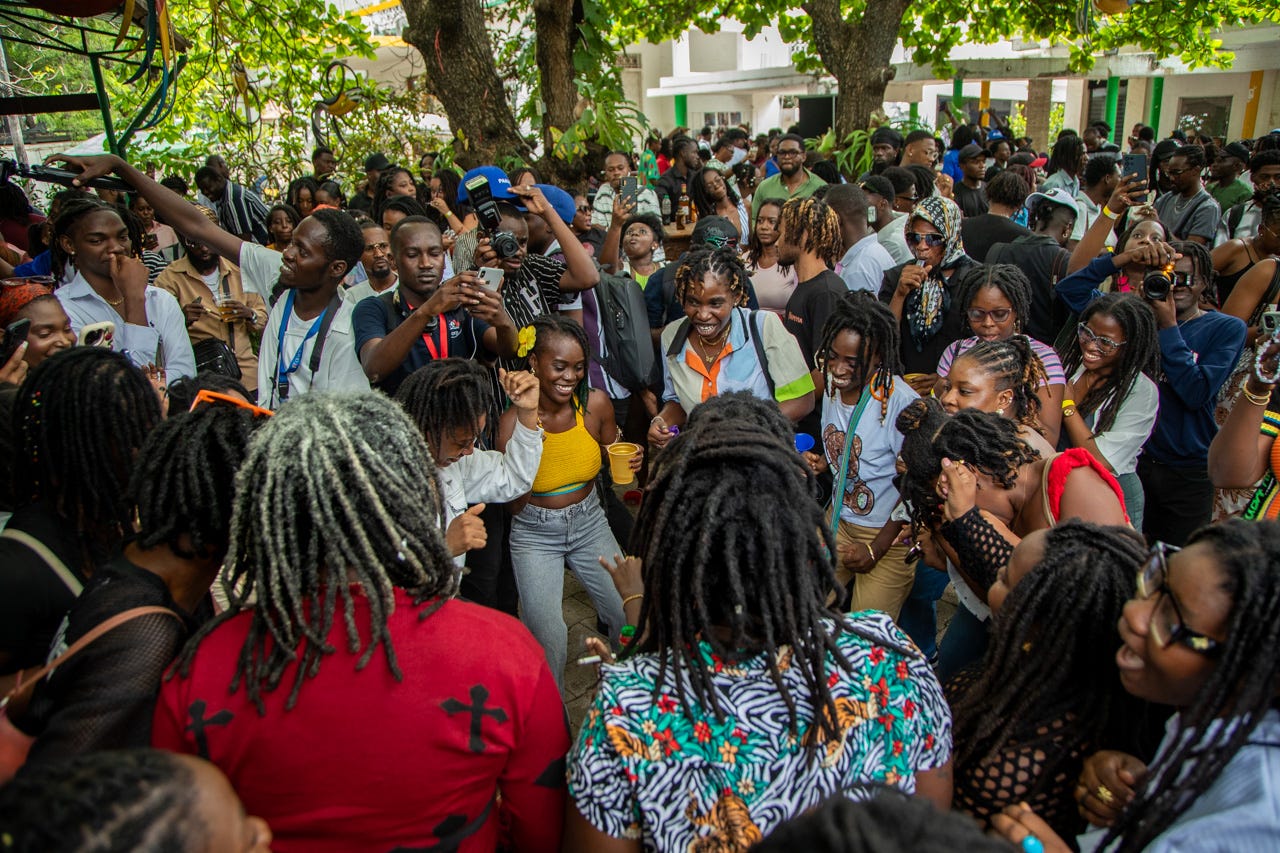
Wearing long natural hair, most often dreads or locks, can sometimes be a struggle in Haiti, as we reported in issue #18 three years ago (in French).

Again this year, people wearing dreads have been forced by Haitian police to cut their hair. Last year, police officers with hair longer than average were also ordered to cut it, following a new directive from the chain of command.
Western prejudices often force a person with long natural hair to face several forms of discrimination. The second edition of the Haitian Locks Festival was held last month to challenge such prejudices. Organized at the Brazil-Haiti Cultural Centre in Pétion-Ville, the event was an opportunity to restore pride in long, kinky hair.


“The goal is to deconstruct stereotypes toward people with long hair or with locks” explains Malaïka Lamarre, contacted by HAÏTI MAGAZINE. “We want to reveal the origins of this discrimination and these stereotypes, but also how a person who wears locks can emancipate itself from its burden. We want to show how important it is to respect the hair and bodies of people who choose natural hair, as well as the beauty in every form of locks. In short, we want to help people reconnect with their identity through their hair.”
The event was aimed at people who have locks or long natural hair, she says, but also at anyone interested in the history of this hair. “It is not an easy journey, but it is an extraordinary one.”


This Week’s Music Video
Pye Sòl feat. Dutty - Woolens Strong
Young rapper Woolens Strong released his first full album this spring and a first excerpt of the music video for “Pye Sòl”, alongside Haitian dancehall veteran Dutty.
It is not the most popular video this month, but it marks an important step in this artist’s career. The album and video reflect the credit he is receiving as a rising star in rap, appreciated as much for the intelligence of his lyrics as for his street credibility. Better-known rappers such as Fantòm (Barikad Crew) and Pèkitan also put in an appearance in the video.
The expression “pye sòl” implies knowing the true state of affairs or walking the streets. It was popularized by a group of police officers, Team Pye Sòl, who took pride in putting their feet “on the ground” rather than fighting armed men from inside their armoured vehicle.
A Fragile Lull, but Kidnappings on the Rise
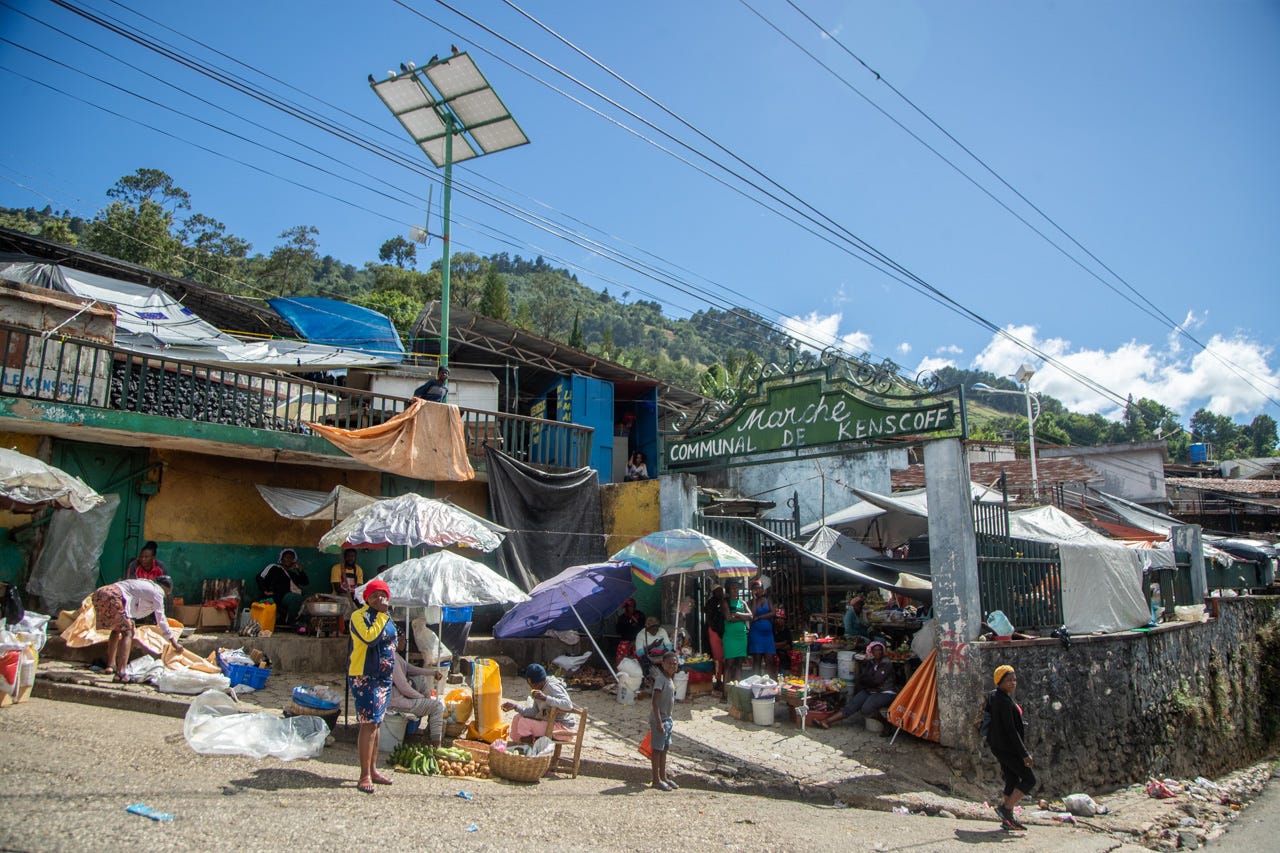
The conflicts in Cité-Soleil and Kenscoff, reported in our last issue, appear to have recently paused. Activities have somewhat resumed in both areas, except when gunfire was reported in Fort-Dimanche yesterday afternoon.
But kidnappings have also resumed. Two foreigners, both South Koreans, were kidnapped last Monday in Delmas 31. The police officer responsible for their security was shot and wounded while trying to stop the abductions. In the meantime, James Boyard, chief of staff to the Minister of defence kidnapped in June, remains in the hands of armed criminal groups.
Other kidnappings have also been reported in the Plaine, northern suburb of Port-au-Prince controlled by criminal groups, where passengers in motor vehicles were reportedly abducted for ransom.
DÈYÈ MÒN ENFO’s team
Photojournalists: Francillon Laguerre, Sonson Thelusma, Andoo Lafond, Milot Andris, Patrick Payin, Ketlain Difficile, Steeve Saint Fleur, Clarens Siffroy, Odelyn Joseph
Community manager: Steven Andris
Editorial board: Etienne Côté-Paluck, Jean Elie Fortiné, Jean-Paul Saint-Fleur
Interns: Wilky Andris, Donley Jean Simon
Special collaboration: Stéphanie Tourillon-Gingras, Mateo Fortin Lubin, Dickens Lundi
Media partners: Centre à la Une, J-COM, Nord-Est Info
Institutional partners: Kay Fanm, Mouka.ht


How Does Your Contribution Help?
Your monthly (or yearly) support helps finance the production and pay the salaries of the DÈYÈ MÒN ENFO staff in the communities of Cité-Soleil, Port-au-Prince and Cayes-Jacmel. In addition, donations are regularly distributed for medical expenses, school fees and other emergencies in these communities.
Press Review
Press Review - Music
Who Were the First Musicians of Compas Direct (3)? - Le Nouvelliste
Who Were the First Musicians of Compas Direct? (2) - Le Nouvelliste
Compas Direct and the Magic of Nemours Jean-Baptiste - Le Nouvelliste
Who Were the First Musicians of Compas Direct? - Le Nouvelliste
Press Review - Performing Arts (Music)
Haiti-Diaspora: The 20th Edition of the Haiti en Folie Festival Celebrates Haitian Culture in Montreal - AlterPresse
Press Review - Visual Arts
Tessa Mars Presents Her First Solo Exhibition in France with “La Mue” - Le Nouvelliste
Insecurity in Haiti: The Arts Sector Is Also Paying a Heavy Price - RFI
Opening of Dany Laferrière’s Exhibition “Éclair – Haïku en Haïti” - Le Nouvelliste
Presentation of the “Lòt Fòm” Program at the Brazil-Haiti Cultural Centre - Le Nouvelliste
Press Review - Cinema
Press Review - Heritage
The Vodou Costume, a Memory Stitched into Haiti’s History - Le Nouvelliste
Haiti-U.S. Occupation: 111 Years Later, the Historical Debate Continues - AlterPresse
Haiti’s History and Culture at the Heart of the Paris Tropical Carnival - Le Nouvelliste
Haiti - Grande Rivière du Nord: Emergency Mission by the National Bureau of Ethnology after the Discovery of Ancient Weapons - AlterPresse
Press Review - Literature
Haitian writer Thélyson Orélien wins the 2026 Prix Méduse for “C’était ça ou mourir” - Le Nouvelliste
The vitality of Haitian literature and the lack of structured criticism: Dany Laferrière’s twofold observation - Le Nouvelliste
For a fully developed literary and scientific Creolophonie - Le Nouvelliste
Dany Laferrière returns to Petit-Goâve - Le Nouvelliste
Prime Minister Alix Didier Fils-Aimé receives academician Dany Laferrière - Le Nouvelliste
“Haïti et les Aigles” by Oloferne Édouard - Le Nouvelliste
Gary Victor returns with Sonson Pipirit - Le Nouvelliste
Dany Laferrière meets with young people at the DNL - Le Nouvelliste
Ahead of his talk on childhood, Dany Laferrière speaks to UEH students - Le Nouvelliste
Press Review - Gender and Women’s Rights
Presented by KAY FANM
The 9th edition of the Nègès Mawon Feminist Festival comes to a close - Le Nouvelliste
Series | Sexual exploitation and abuse (1): SOFA strengthens the role of civil society organizations - AlterPresse
Haiti: Sexual violence and humanitarian crisis, the ordeal of displaced people at the Ferme agricole de Papaye site - AlterPresse
Haiti-Crime: Three murders in 18 days, including that of a market woman, alarm the North-East Gender Platform - AlterPresse
Haiti: SOFA celebrates 40 years of commitment to women’s rights and autonomy - AlterPresse
Nègès Mawon Festival: a decade of voices, memory and resistance celebrated through music - Mus’Elles
Haiti: More than 3,000 cases of sexual violence reported in three months, UN warns - AlterPresse