


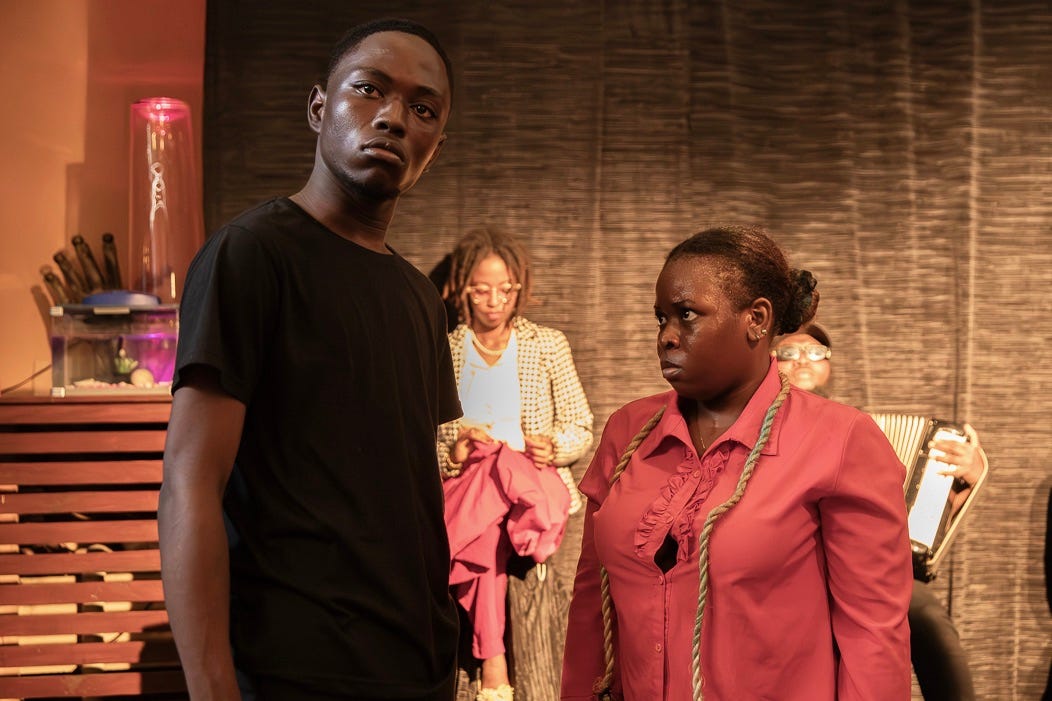
A public market, a microcosm of society, was at the heart of Agir pour la réconciliation et la paix (Working Toward Reconciliation and Peace), a play presented in late March to celebrate International Theater Day. All this and much more in issue #61 of HAITI WEEKLY by DÈYÈ MÒN ENFO.
Sommaire # 61
Theater Against Social Divisions
Growing Up in a Camp, Playing Out One’s Life
Music Video of the Week : Pye sou kou by Charlin Bato
The Ball Rolls, the City Stands
Terror in Artibonite
Christophe Avenue: Still Under Tension
Press Reviews
Theater Against Social Divisions
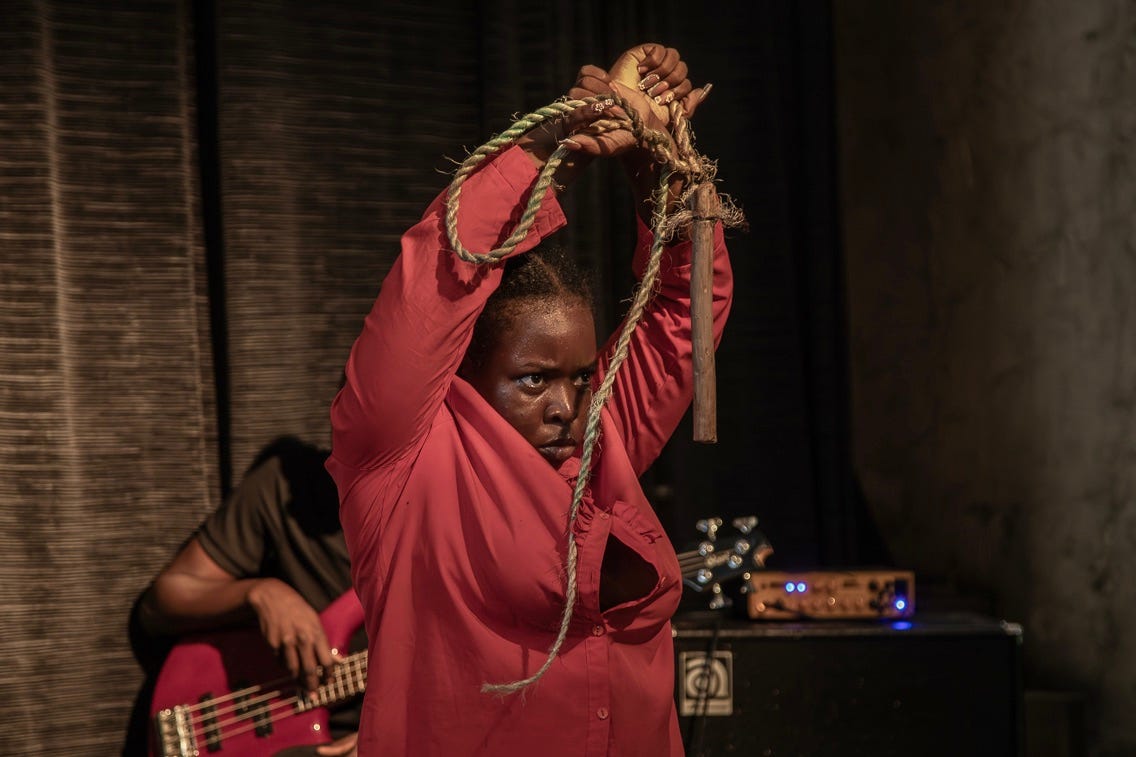
Women vendors in and around public markets bear the brunt of many of the problems plaguing Haitian society. In addition to being sometimes forced to relocate due to violence in certain neighborhoods of the capital, they must also contend with government officials who are all too often tempted to abuse their power.
These issues were the central theme of a play presented on March 26 in Pétionville by the Ateliers Encriture and the French Institute in Haiti (IFH). In the play, directed by Ronald Vital, vendors of used clothing and sandals, as well as street vendors, attempted — both literally and figuratively — to cut the rope around their necks.
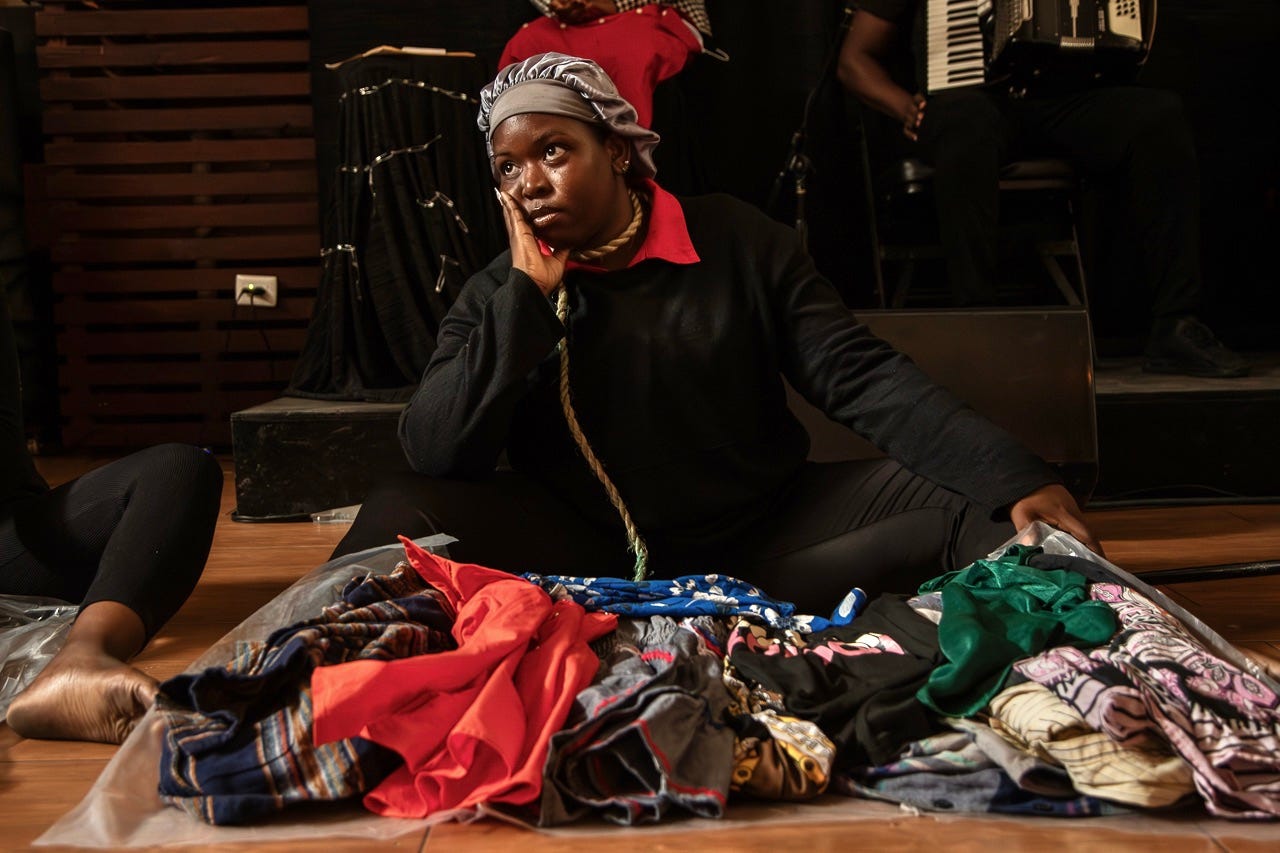
Local vendors face several obstacles. First, many city governments seem oblivious to the growing number of vendors in neighborhoods that have so far been relatively spared from conflict. They do not hesitate to remove vendors who set up shop on sidewalks, deeming them “unauthorized.” Second, market officials are too often inclined to take advantage of their positions without providing adequate service.


In addition to the characters on stage, a singing voice echoed the vendors’ demands throughout the play, accompanied by musicians. The characters managed to free themselves from their symbolic ropes when everyone finally began to talk to and listen to one another.
Presented at Aioli in Pétionville, Agir pour la réconciliation et la paix aimed to use theater as a “universal language to promote peace and unity,” according to its producers. The Ateliers Encriture collective wrote it, and Sabine Auguste, Woodnaëlle Anne Delice, Fameuse Maude, Karl Laurent Dortissant, Marie-Carly Lafontant, and Williamson Augustin performed it.
Growing Up in a Camp, Playing Out One’s Life
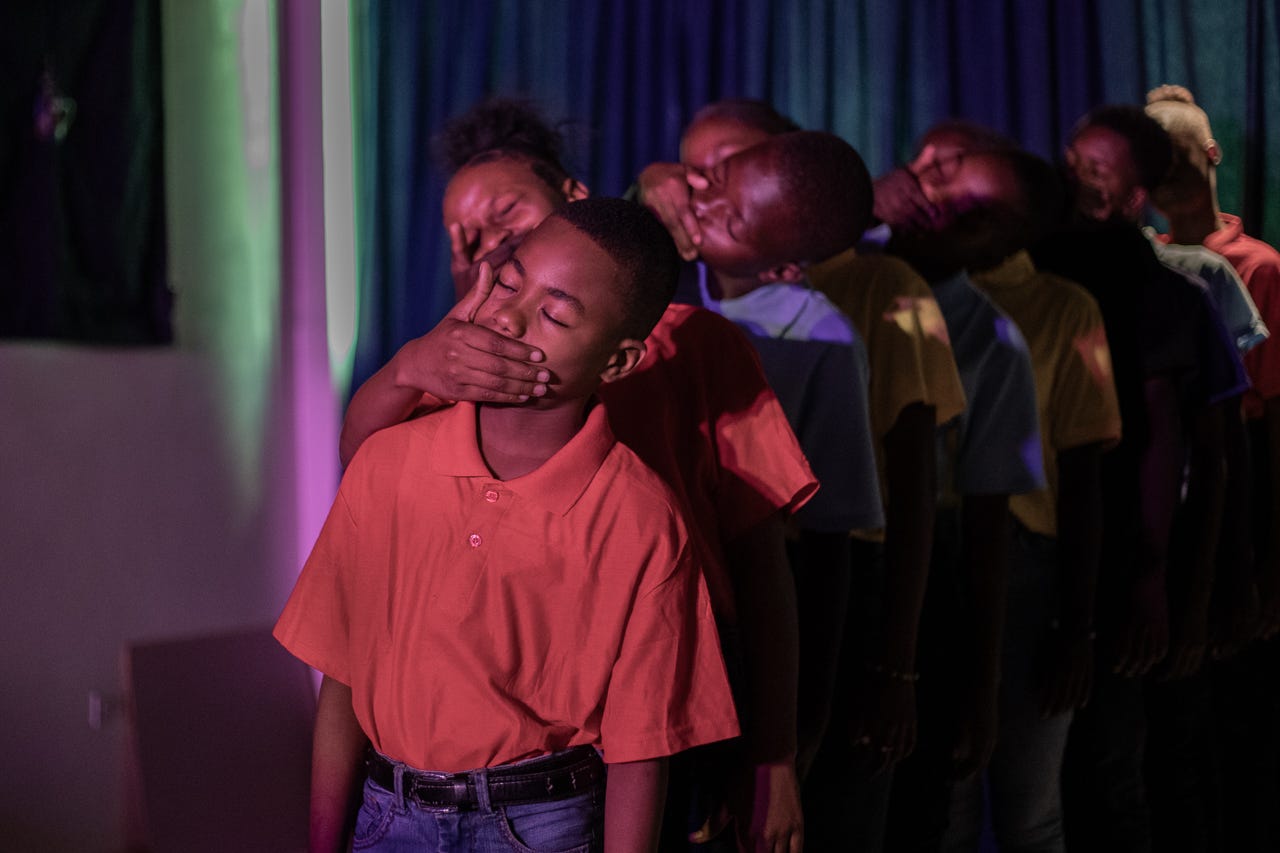
The teenagers from the displacement camps who participated in the “Theater for Peace” project, which we highlighted in last week’s edition, finally presented their deeply moving production on March 30 and 31 at the Pyepoudre Cultural Center in Port-au-Prince.
With tears in their eyes, these young people shed light on the difficult living conditions faced by people their age. In an original production, they took turns denouncing these challenging situations.
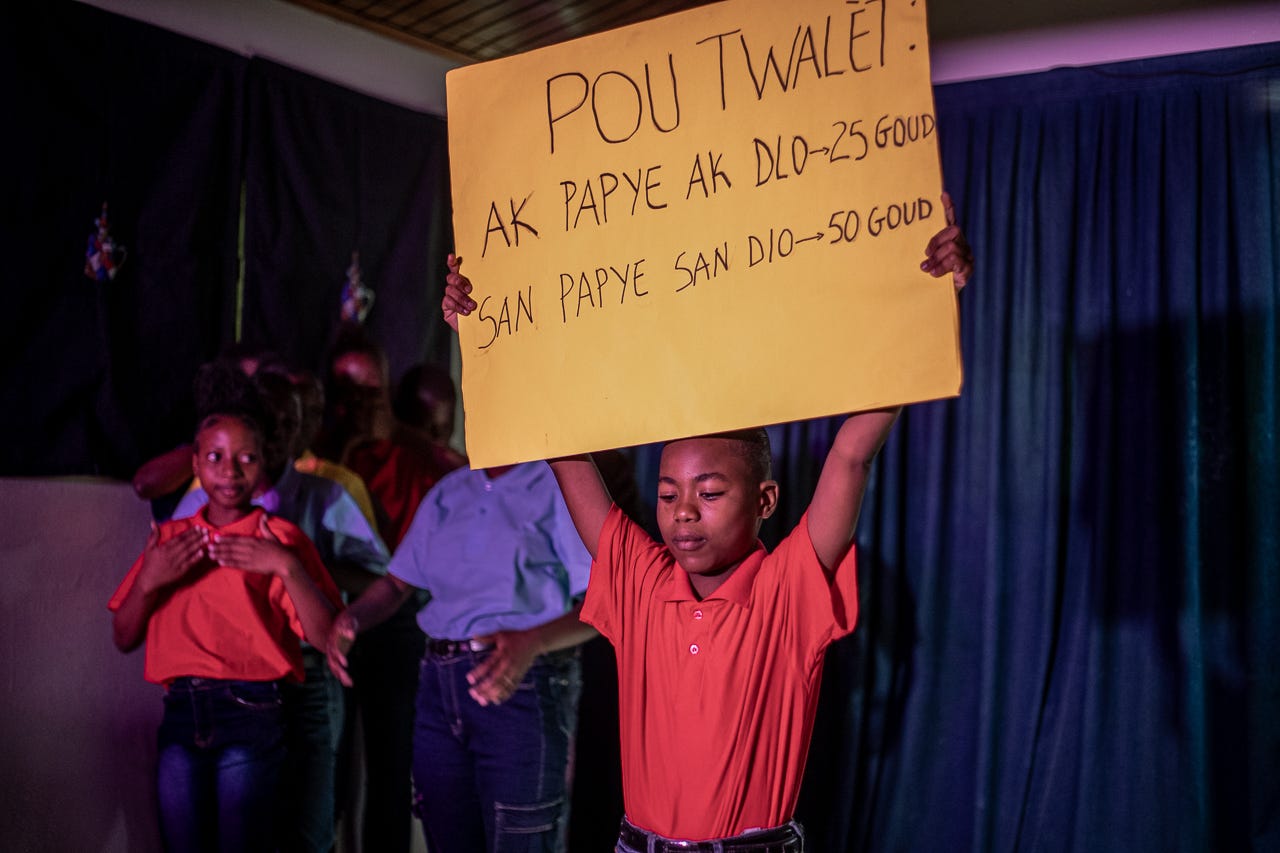
Many young girls have difficulty finding menstrual products to manage their periods. One girl recounted how a camp official allegedly touched her while she was speaking. Tears began to flow as she spoke. She does not want to spend her childhood in a camp for displaced people or grow up there.
Others also described how some camp officials would trade food for sexual favors.


A young boy also couldn’t hold back his tears as he recounted how he had feared for his little sister’s life when a fight broke out during a food distribution. The police intervened with tear gas, which caused his sister to go into respiratory distress.
This theatrical production was organized by the Haiti Theater Intervention (BIT Haiti) and directed by Daphena Rémédor and Jenny Cadet.
Music Video of the Week
Pye sou kou - Charlin Bato
After releasing her debut album last summer, Charlin Bato finally unveiled the music video for one of her catchiest and most sensual tracks. The chorus of the compas song “Pye sou kou” repeats, in a languid tone: “I just want to hear your cries, I want to devour you in the living room, I just want to hear your sounds.”
The music video is equally explicit. It shows a scantily clad woman dancing around a pole in front of the singer’s bed. In the opening scene, she complains to two friends in English that men don’t seem to have as much stamina or strength these days. Then, Bato hands her a business card with his handwritten number on it.
The Ball Rolls, the City Stands

Several soccer tournaments and other team sports events are taking place in the capital this spring. On Sunday, we attended the “Company Tournament,” organized by comedian and host Kako, which took place on the large field in Peguyville. The tournament featured teams of employees from various major companies across the country competing against one another.


On Sunday, Ibo Kinkay’s team narrowly defeated Casami’s team 4–3 in the semifinal match. The tournament final will take place on Sunday, April 13.


Terror in Artibonite
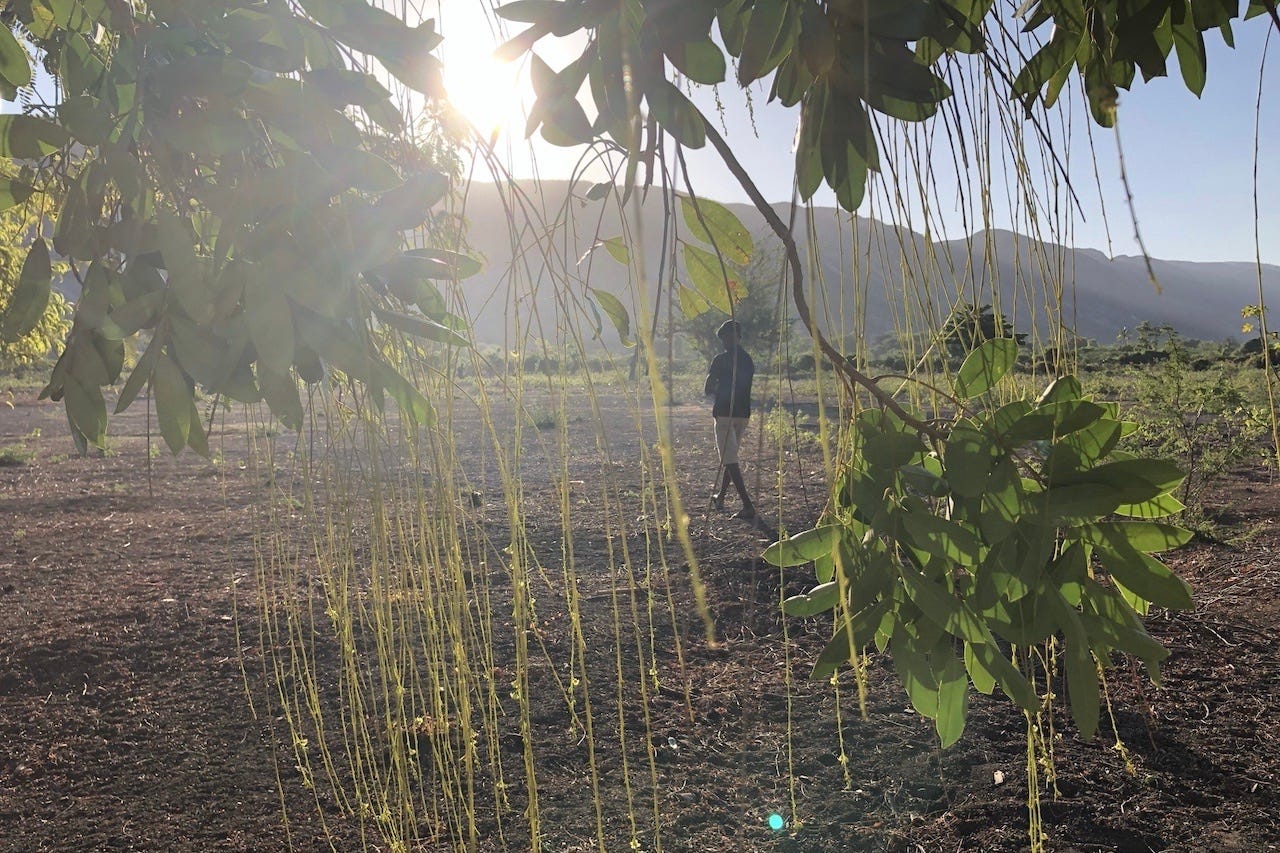
Earlier this week, the Artibonite region was the site of yet another massacre. According to the RNDDH, at least 70 civilians of all ages are reported to have lost their lives last Sunday. According to other sources, nearly 50 homes were also set on fire.
Because the area is difficult to access, it is hard to determine the exact number of victims. Police attempted to intervene in the area earlier this week, while further abuses were reported on Monday and Tuesday.
According to initial reports from the Haitian press, the attackers split into groups and blocked certain access points to slow down the police. Babies and the elderly were reportedly targeted, as were prominent figures from local self-defense groups. The International Organization for Migration reports that nearly 9,000 people—more than 2,300 families—fled the area after the attack, in addition to dozens of injured individuals.
The UN and several foreign governments have expressed their condolences. The Haitian government’s slow response has been criticized in editorials this week.
The massacre took place in Jean-Denis, a town in the commune of Petite-Rivière-de-l’Artibonite. Located in the southern Artibonite region, which borders the West Department where Port-au-Prince is located, the area has been largely controlled by armed criminal groups for over three years. This is not the first massacre attributed to the Gran Grif group, which is known for its extremely violent methods.
Christophe Avenue: Still Under Tension
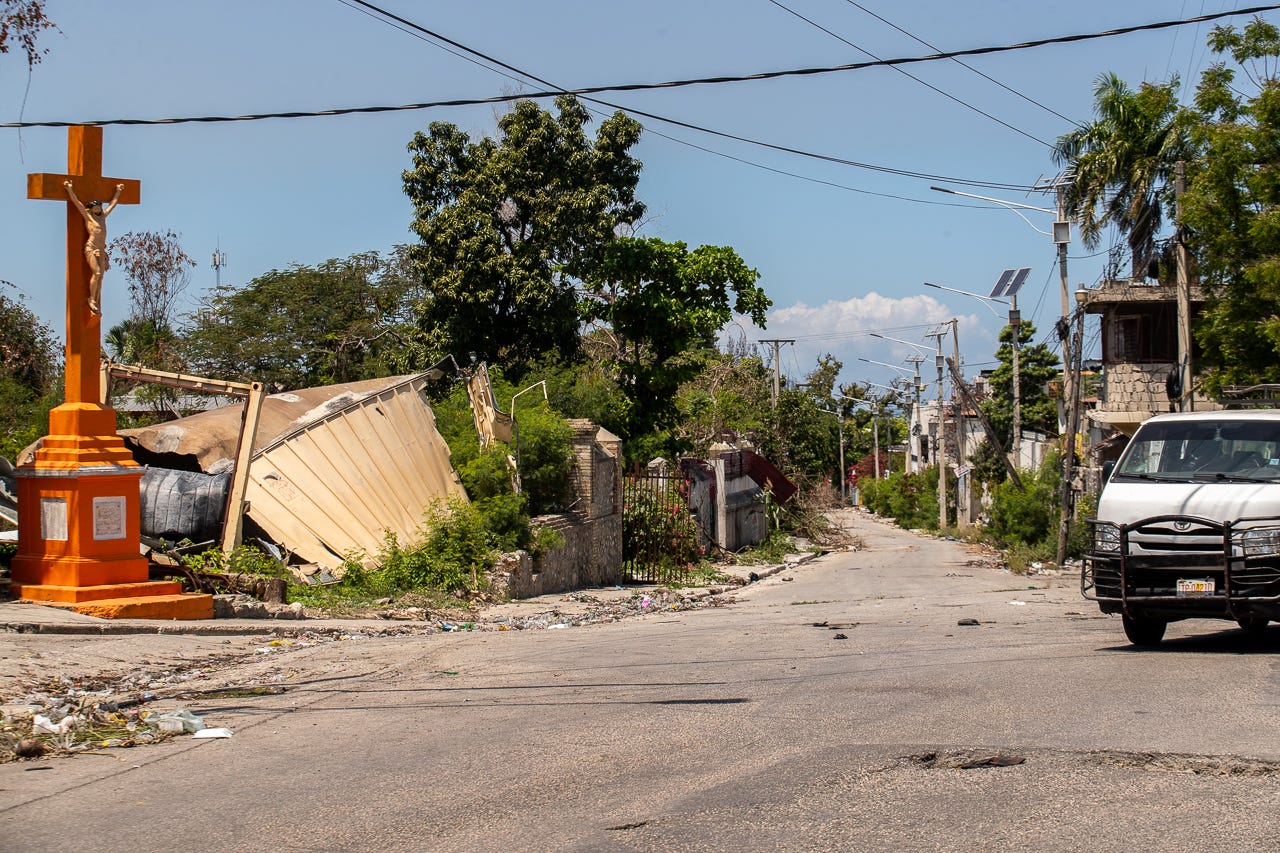
Despite several interventions in downtown Port-au-Prince, Christophe Avenue, located above the city center and home to the country’s main institutions of higher education, remains largely inaccessible.
Conflicts break out there sporadically, and residents avoid the area whenever possible. At the intersection of Jean-Paul II Avenue (Turgeau) and Christophe Avenue, traffic has become so sparse that the neighborhood looks like a wasteland, as shown in the above photo, taken at the corner of Charles-Sumner.
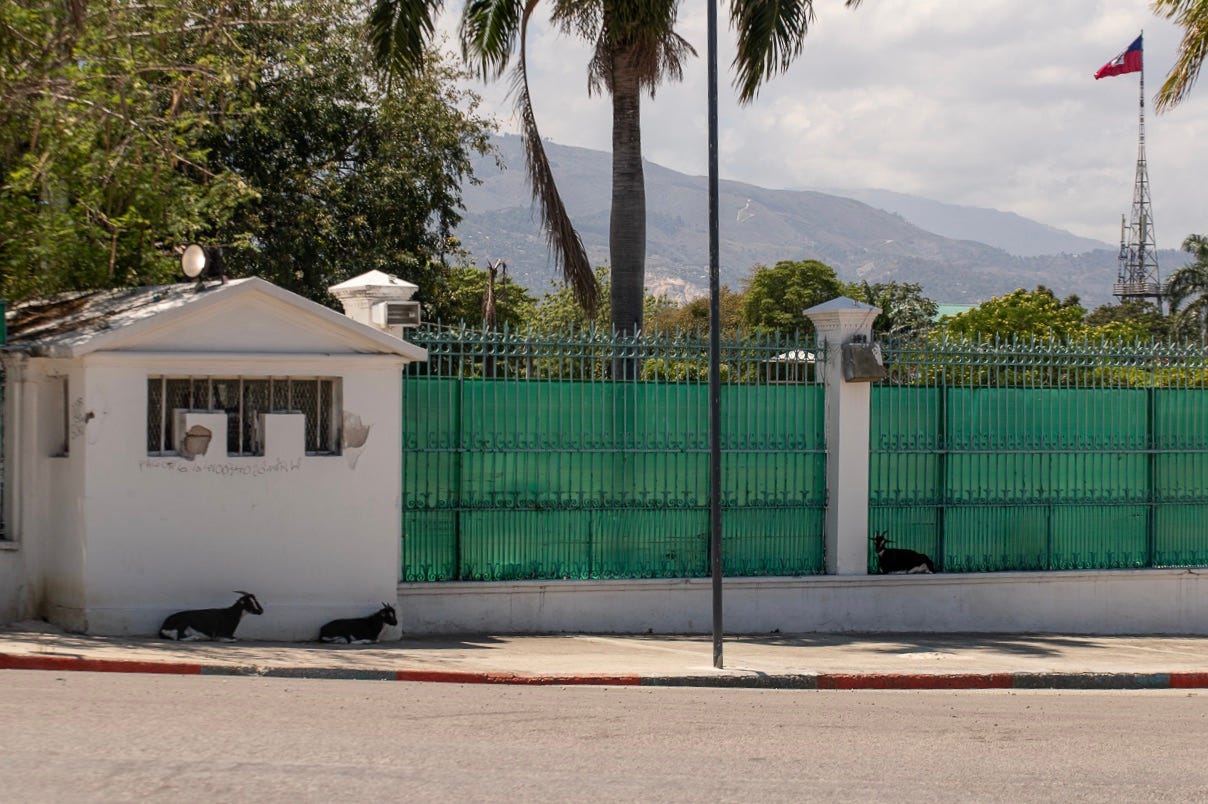
Meanwhile, last week, Acting Prime Minister Alix Didier Fils-Aimé last week praised police operations around the Champ-de-Mars, an area in the city where many seats of power are concentrated. Fewer people are passing by the grounds than before, as evidenced by the goats that took advantage of the lull to find some shade there (see photo above).
DÈYÈ MÒN ENFO’s team
Photojournalists: Francillon Laguerre, Sonson Thelusma, Andoo Lafond, Milot Andris, Patrick Payin, Ketlain Difficile, Steeve Saint Fleur, Clarens Siffroy
Community manager: Steven Andris
Editorial board: Etienne Côté-Paluck, Jean Elie Fortiné, Jean-Paul Saint-Fleur
Interns: Wilky Andris, Donley Jean Simon
Special collaboration: Stéphanie Tourillon-Gingras, Mateo Fortin Lubin, Françoise Ponticq
Media partners: Centre à la Une, J-COM, Nord-Est Info
Institutional partners: Kay Fanm, Mouka.ht


How Does Your Contribution Help?
Your monthly (or yearly) support helps to finance the production and pay the salaries of the DÈYÈ MÒN ENFO staff in the communities of Cité-Soleil, Port-au-Prince and Cayes-Jacmel. In addition, donations are regularly distributed for medical expenses, school fees and other emergencies in these communities.
Press Reviews

Press review - Gender and women’s rights
presented by Kay Fanm

Press Review – Performing arts
Jérémie hosts the 5th edition of the theatre festival “Regards ailleurs” - Le Nouvelliste
Standing ovation for the play “Lakou” at the El Rancho hotel - Le Nouvelliste
Press Review – Film
Player 1/2: a chronicle of ordinary misogyny on the big screen - Le Nouvelliste
A dream, a camera, a future: Wegherley Joseph - Le Nouvelliste
Press Review – Culture
Launch of the Fabrique des Arts in Les Cayes - iciHaïti
After the Académie française, Dany Laferrière joins the House of Molière - Le Nouvelliste
Cap-Haïtien celebrates Abigaïl Alexandre, winner of the international Éloquentia competition - Le Nouvelliste
Jacques Nesi presents “Haiti, the making of a society of peers” - Le Nouvelliste
Press Review – Heritage
How a digitization project for classic Haitian works came to a halt - Ayibopost
Rara, an inexhaustible cultural treasure in Haiti - Le National
Haiti puts Trase Vèvè forward at UNESCO to protect its cultural heritage - Centre à la Une
Press Review – Gender And Women’s Rights
Presented by KAY FANM
The Kenyan mission implicated in 4 cases of sexual abuse and exploitation in Haiti - Ayibopost
Haiti—Camps: POHDH warns of the distress of pregnant and breastfeeding teenage girls - AlterPresse
Culture: Zikonnect 3.0 concludes, a program dedicated to empowering women in Haiti’s music industry - AlterPresse
Toward a scientific and academic reflection on Haitian feminism - Le Nouvelliste
Alarming rise in sexual violence against minors in Grand’Anse: the Zanmi Timoun Foundation sounds the alarm - L’exclusivité Infos
