Last month, Jacmel celebrated its carnival with its usual enthusiasm, despite the lack of tourists from outside the department. Nevertheless, the people of Jacmel celebrated art and festivities, always with a touch of socio-political commentary. All this and more in issue #58 of HAITI WEEKLY by DÈYÈ MÒN ENFO.
Editor’s note: The past six months have been though, but I’m getting there, bit by bit (“tipatipa”). Burnout and other medical complications forced me to stop working during this time. Thankfully, our team kept our social media accounts active (Facebook, Instagram), and now the newsletter is finally back. Thanks for your patience.
Etienne Côté-Paluck, editor-in-chief
Summary #58
Carnival Reigns Supreme in Jacmel
Music Video of the Week: Ou banm lanmou by Teddy Hashtag and Rutshelle
Port-au-Prince: Some Neighborhoods Liberated While Others Remain in Conflict
Press Reviews
Carnival Reigns Supreme in Jacmel
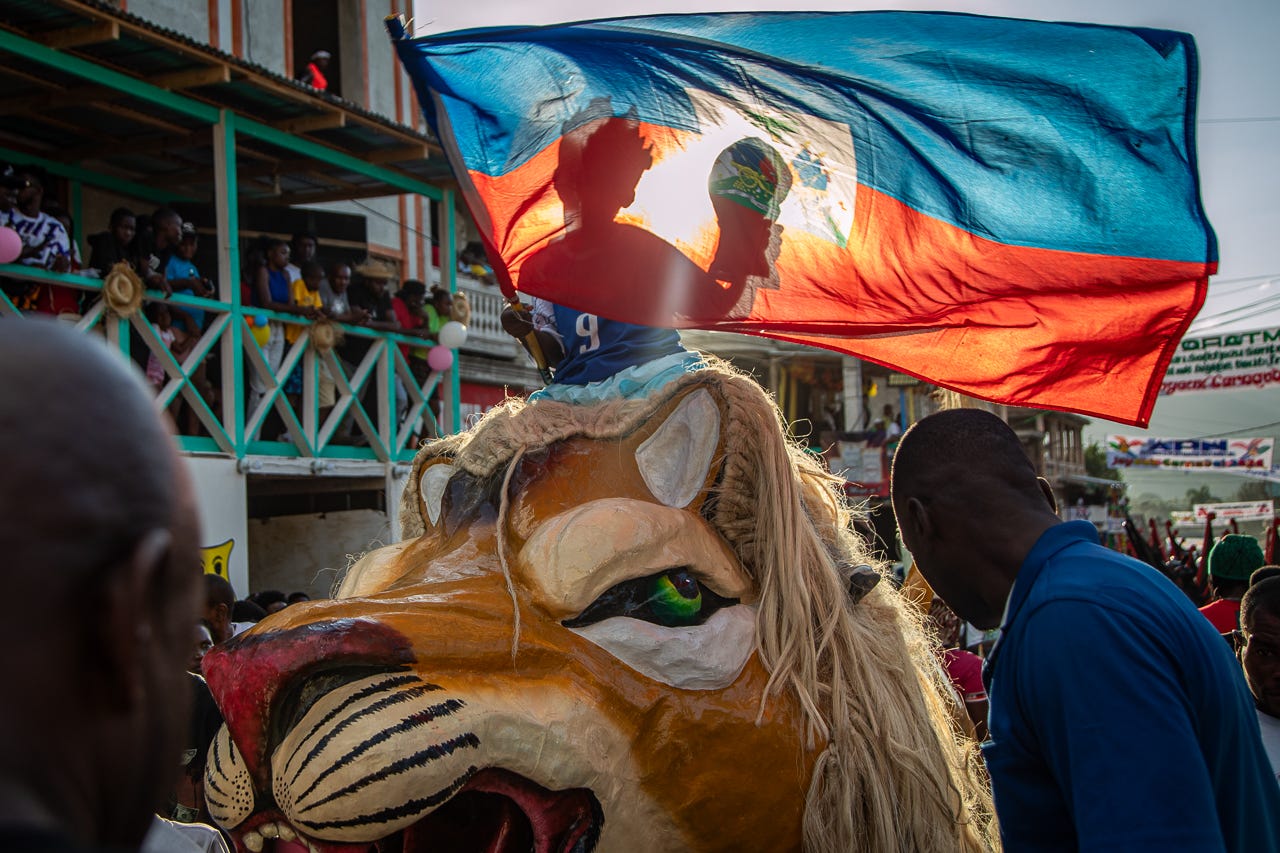
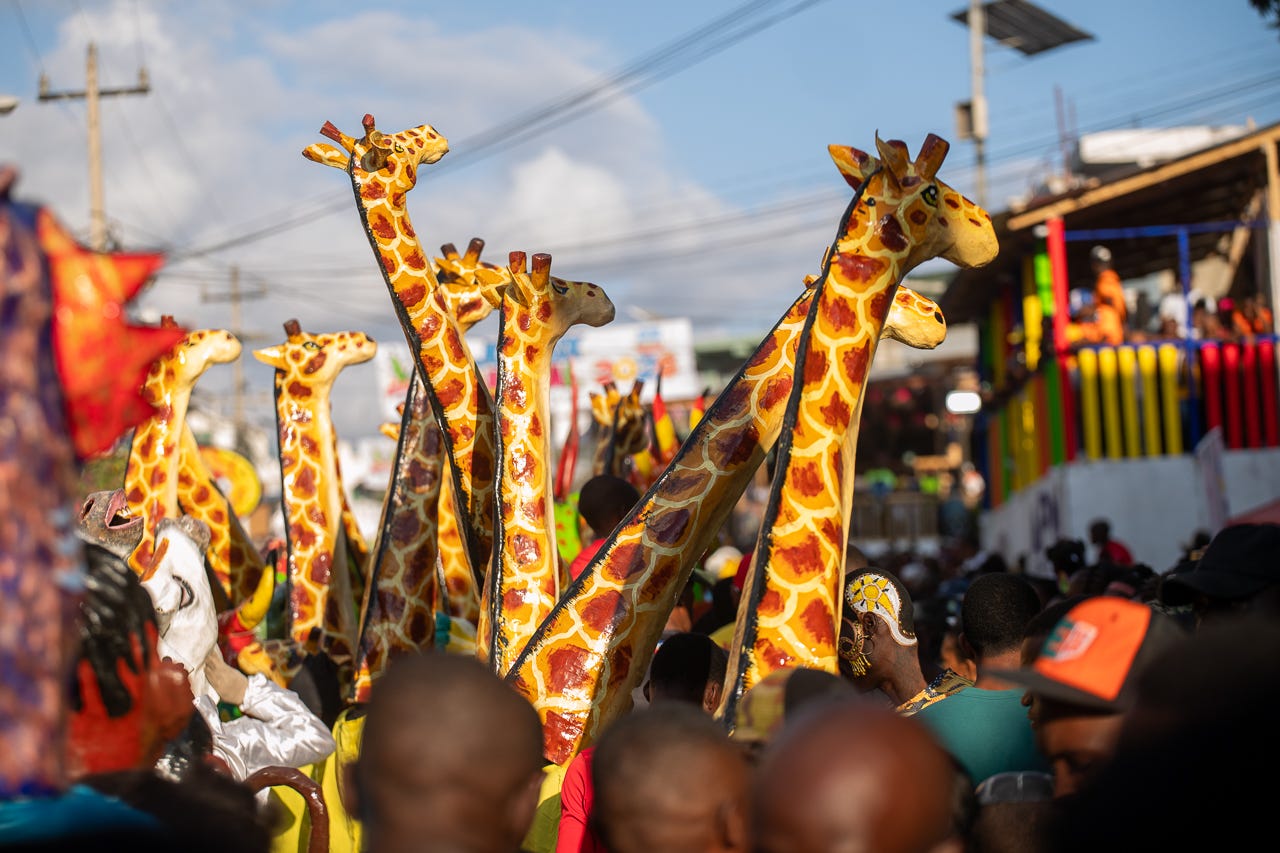
The Jacmel Carnival is an integral part of this small town’s identity. Held one week before the national carnival in the rest of the country, it showcases the best artists from this region, which is known for its crafts.
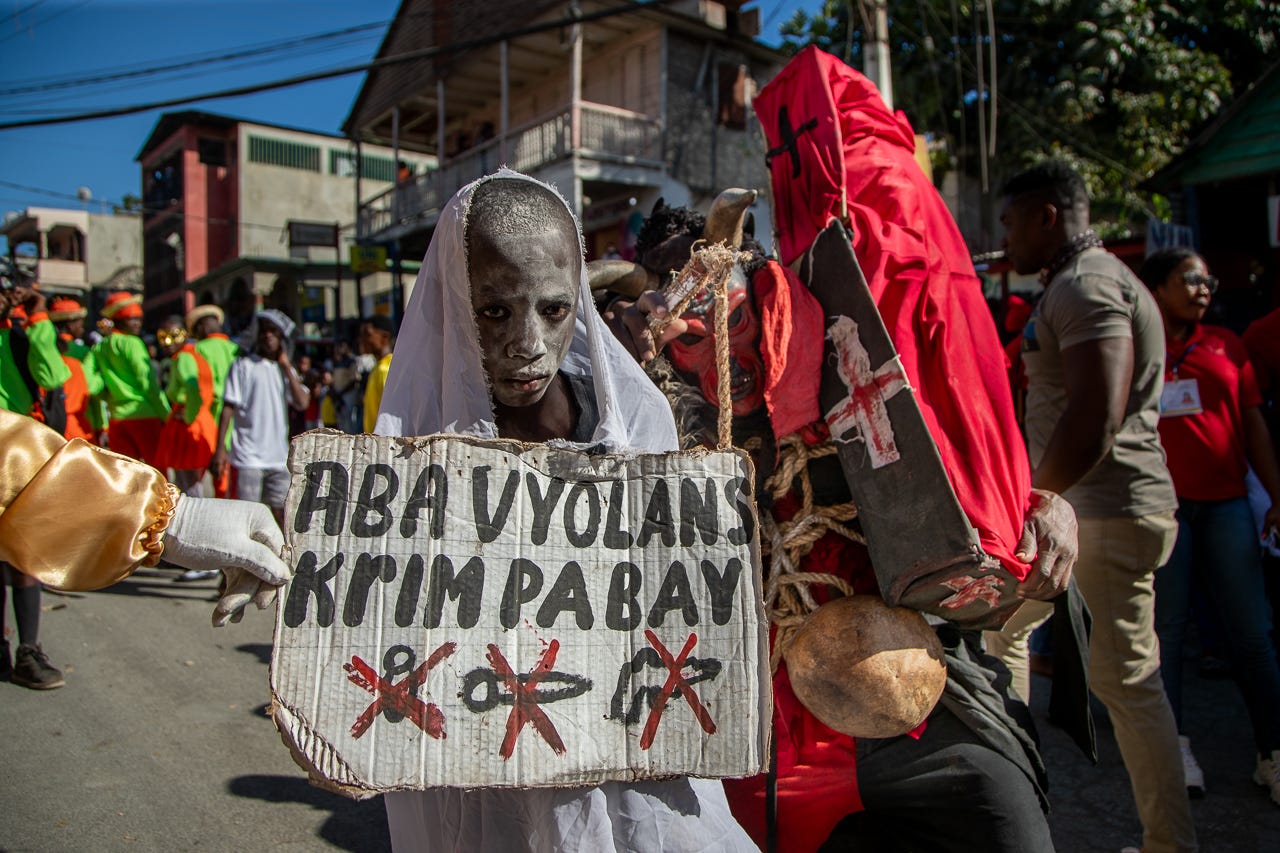
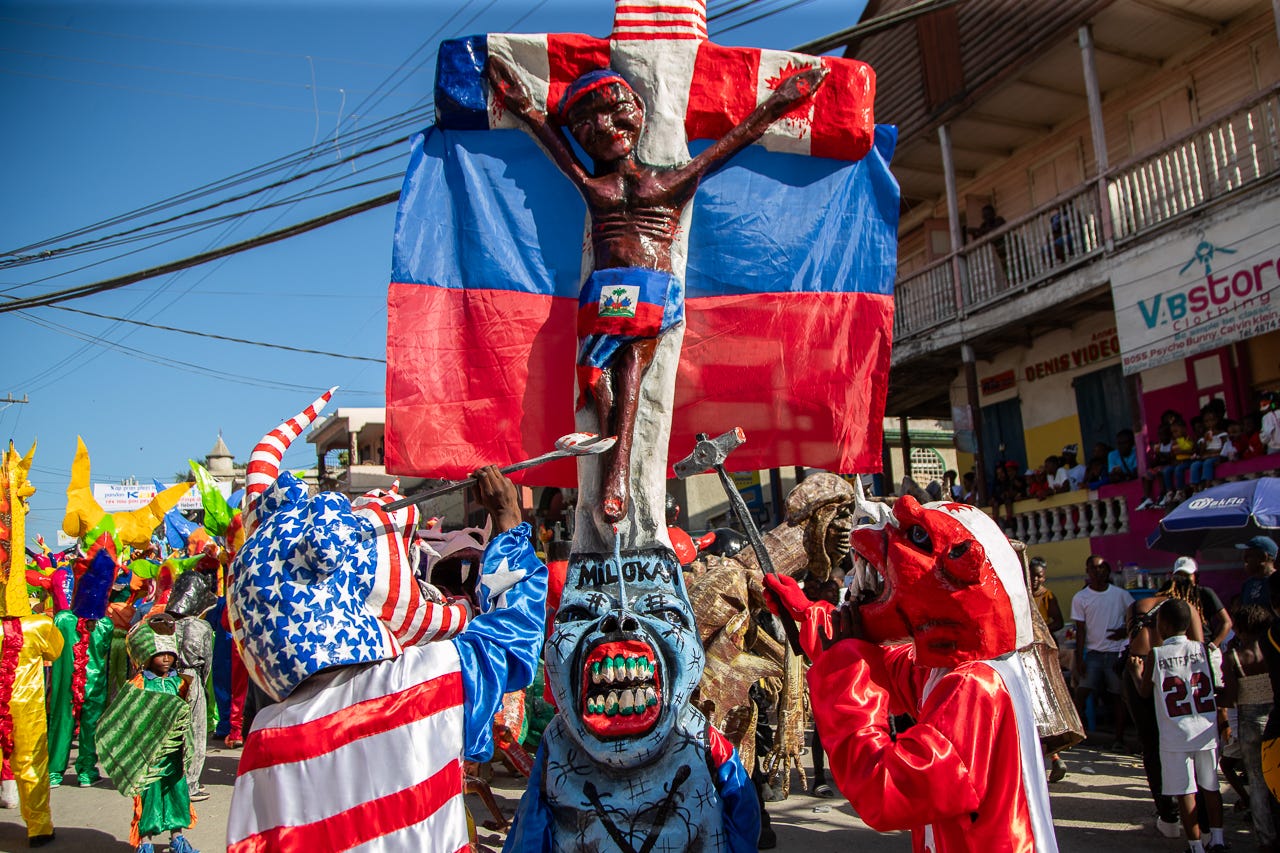
The war atmosphere in the capital and certain neighboring regions prevented most visitors from outside the country and the Southeast Department from participating in the celebrations. This did not escape the artisans’ attention. One of the signs (above) read: “No to violence, crime does not pay.” Another papier-mâché piece featured a cross adorned with the flags of three “friends of Haiti” countries. (France, the United States, and Canada, see first photo). On this cross, a black man draped in the Haitian flag was crucified.
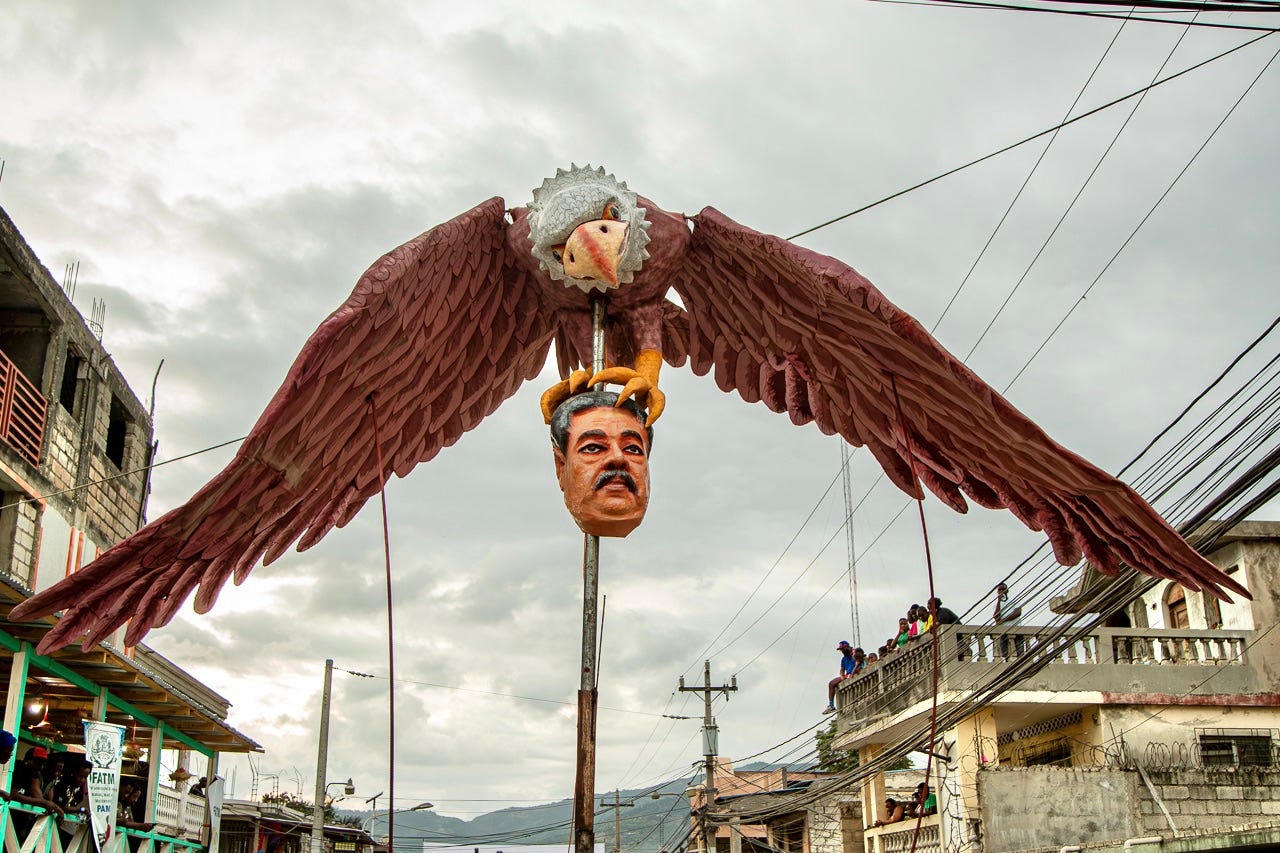
Artisans have also been inspired by international politics, often using the carnival as an opportunity to express sharp criticism of national or foreign leaders through their creations. One such work featured a bald eagle flying with Nicolas Maduro’s head in its talons (photo above).
Another scene showed Haitians with suitcases. One of the suitcases read: “We want to go home” (center photo, below). This was in reference to the hundreds of thousands of Haitian expatriates.


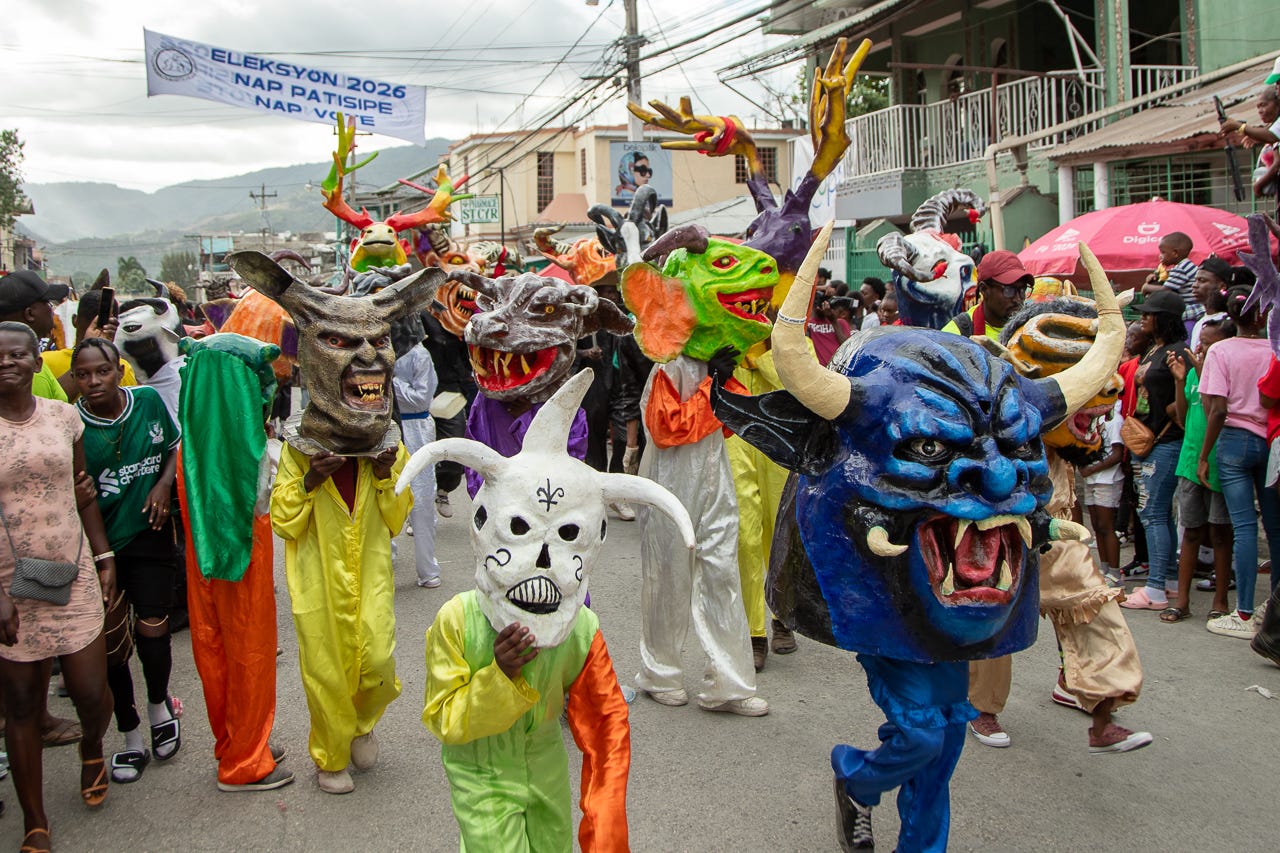
The djab, renowned carnival characters, were still accompanied by lansè kòd to instill fear in young and old alike.
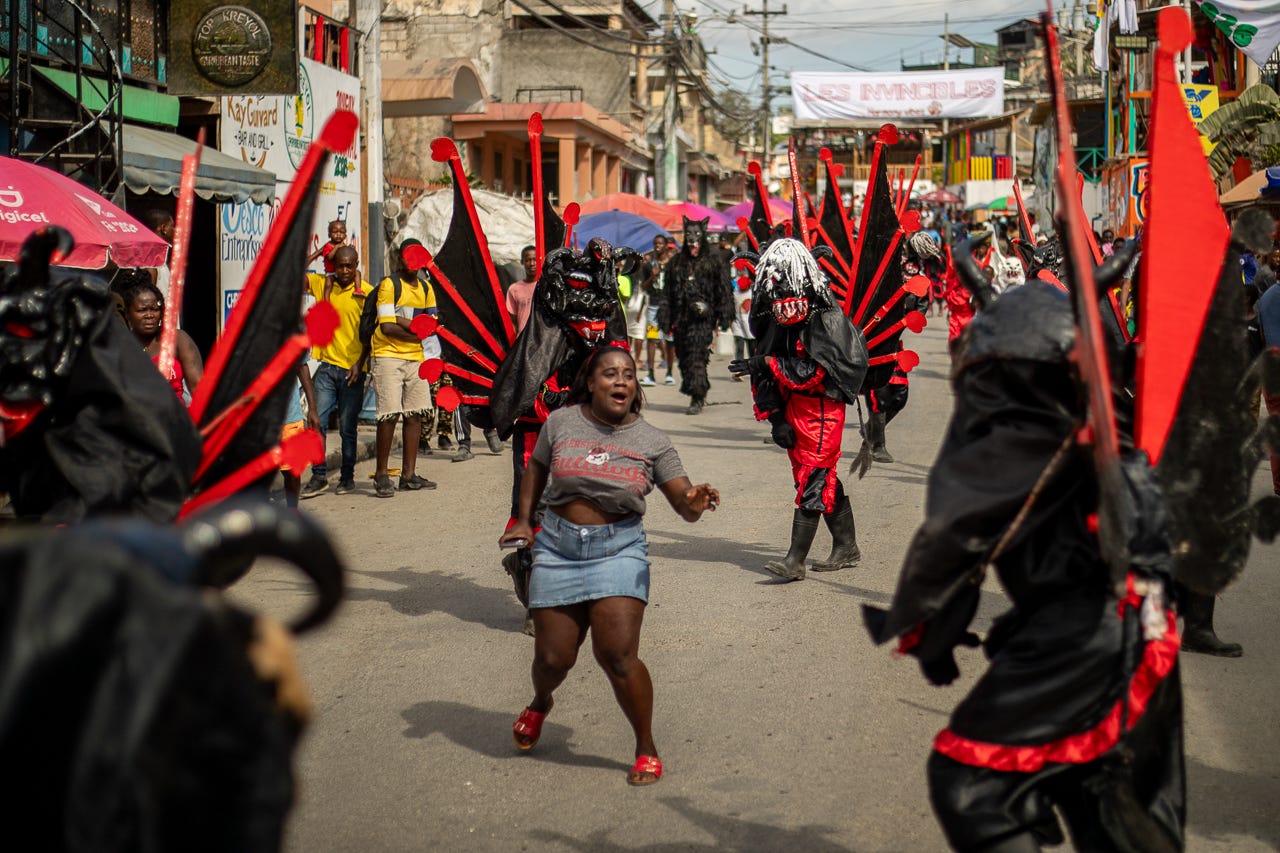
They sometimes surround festival-goers and frighten them by promising to stain their clothes with their black substance.


After the dancers and papier-mâché masks, brass bands and DJs took over the town’s main street at nightfall. The parade, which is also a competition, takes place there.
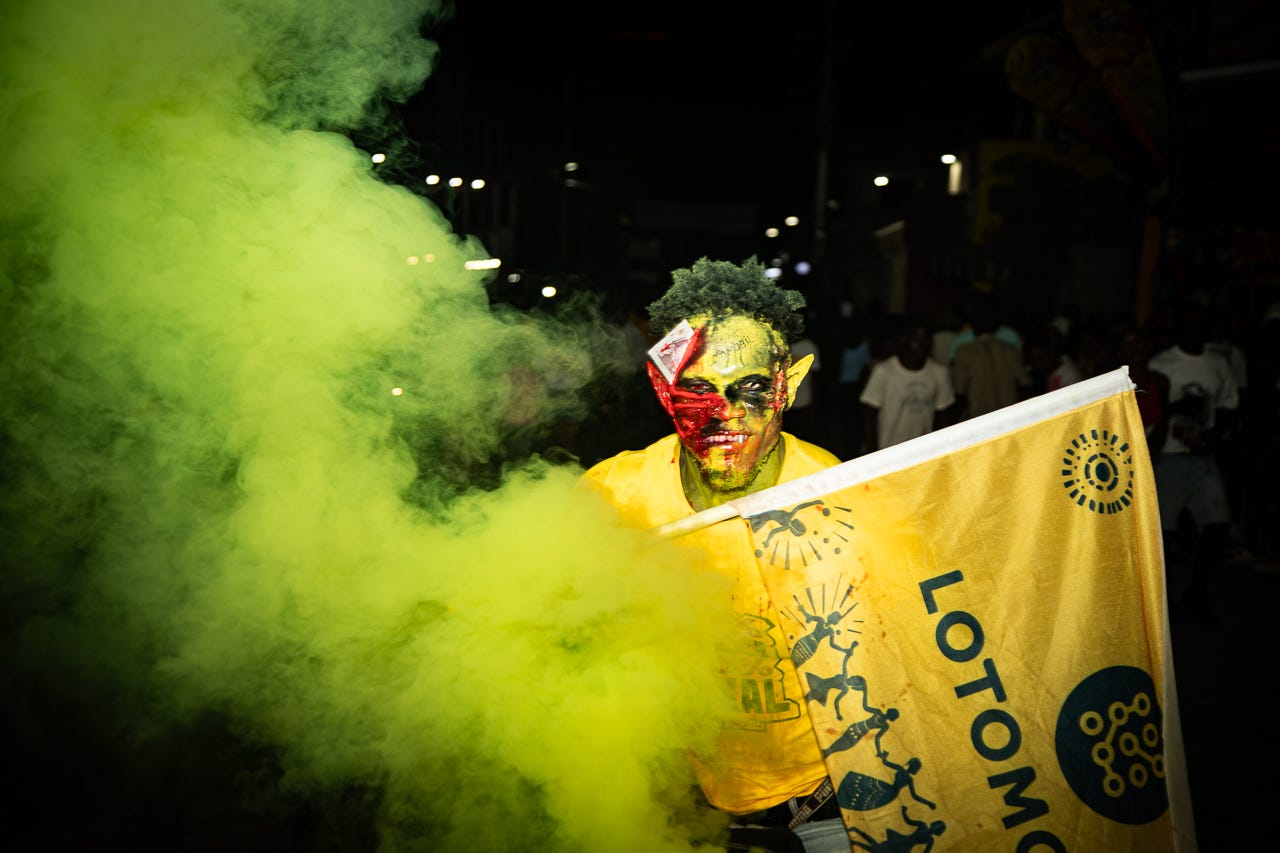
The makeup at this festival was very elaborate, where horror and beauty, as well as political commentary, rub shoulders. Daytime events are more family-oriented and give way to evening parties where alcohol flows freely.


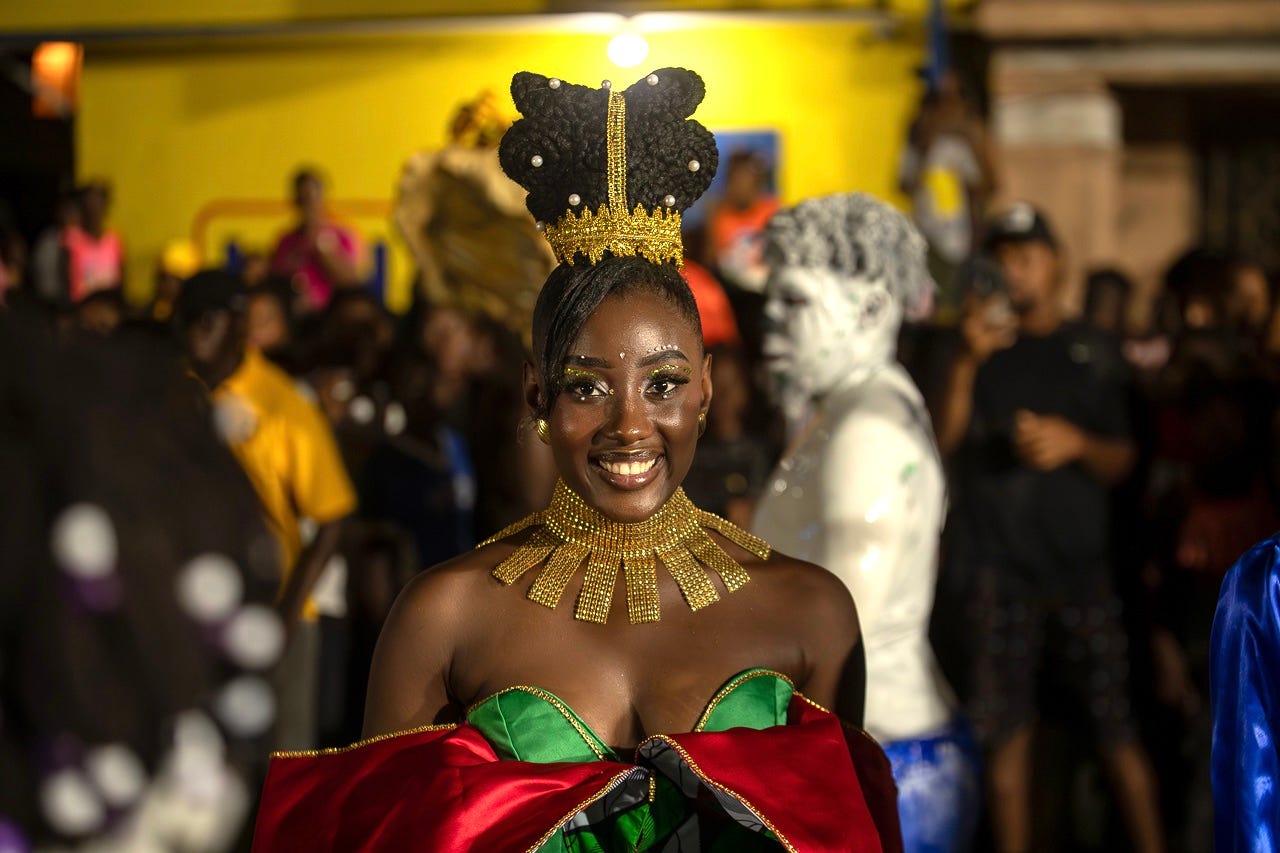
At the end of the daytime parade, a jury appointed by the Jacmel city council selects winners in various categories, including dance troupes, papier-mâché masks, marching bands, and, of course, a queen (photo above) and a king.


The day always begins with the dancers showing off their finest costumes in choreography created especially for the occasion.
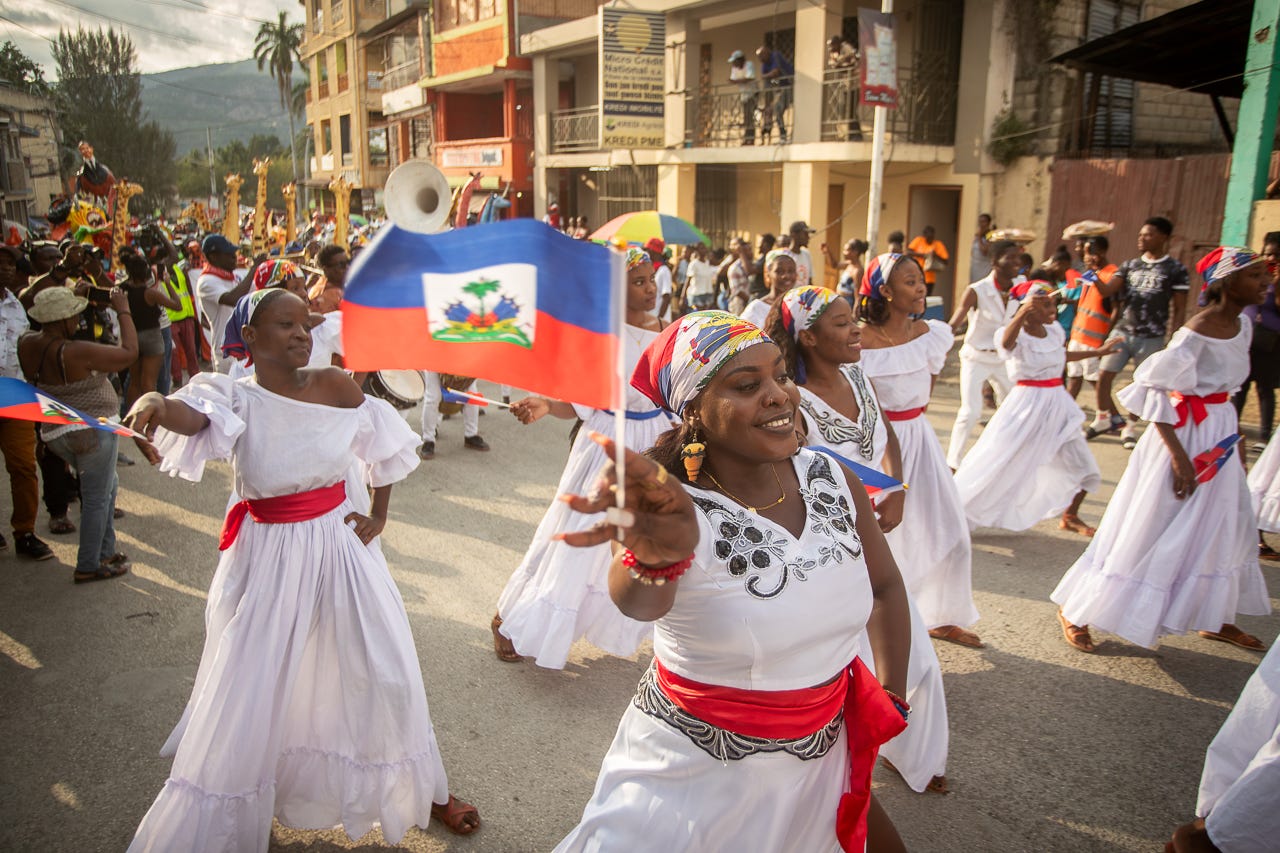
The colors are vivid under the bright midday sun shining down on the carnival parade.


Several friends of HAITI WEEKLY are also taking part in the parade, including artist Payen Ernst (pictured below wearing a red T-shirt) and his giant puppet sculptures.
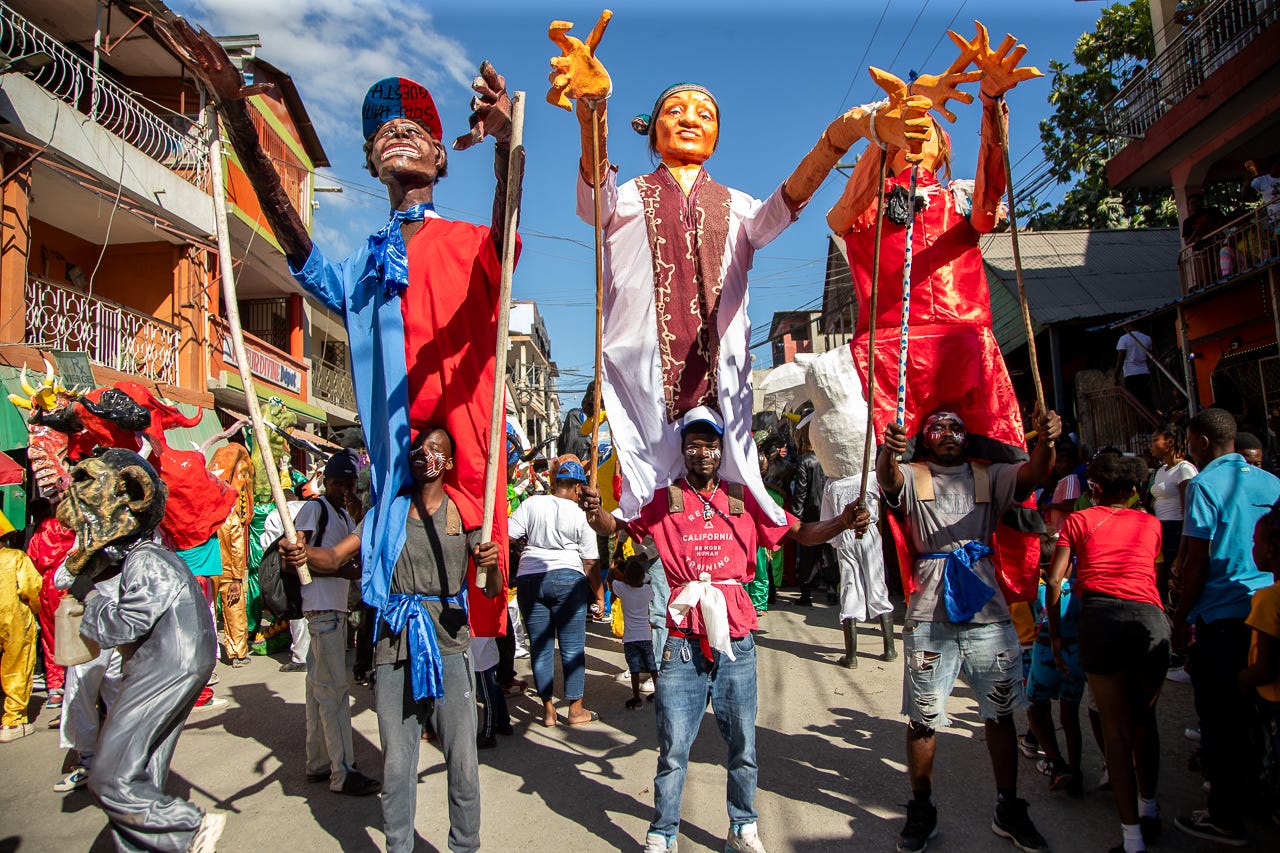
Humor is at the heart of the carnival. Consider, for example, the brightly colored cow reading a biology textbook (second photo below), or the group of monkey monsters who are also musicians (third photo below).


Cynicism is never far away, as evidenced by the coffin (below) painted in the colors of the Haitian flag. On it is written: “the victims,” implying insecurity due to armed conflict. One of the pallbearers displays Haiti’s motto on his back: “Unity is strength,” and on the side of the coffin is written: “Yon chans pou Ayiti” (a chance for Haiti).
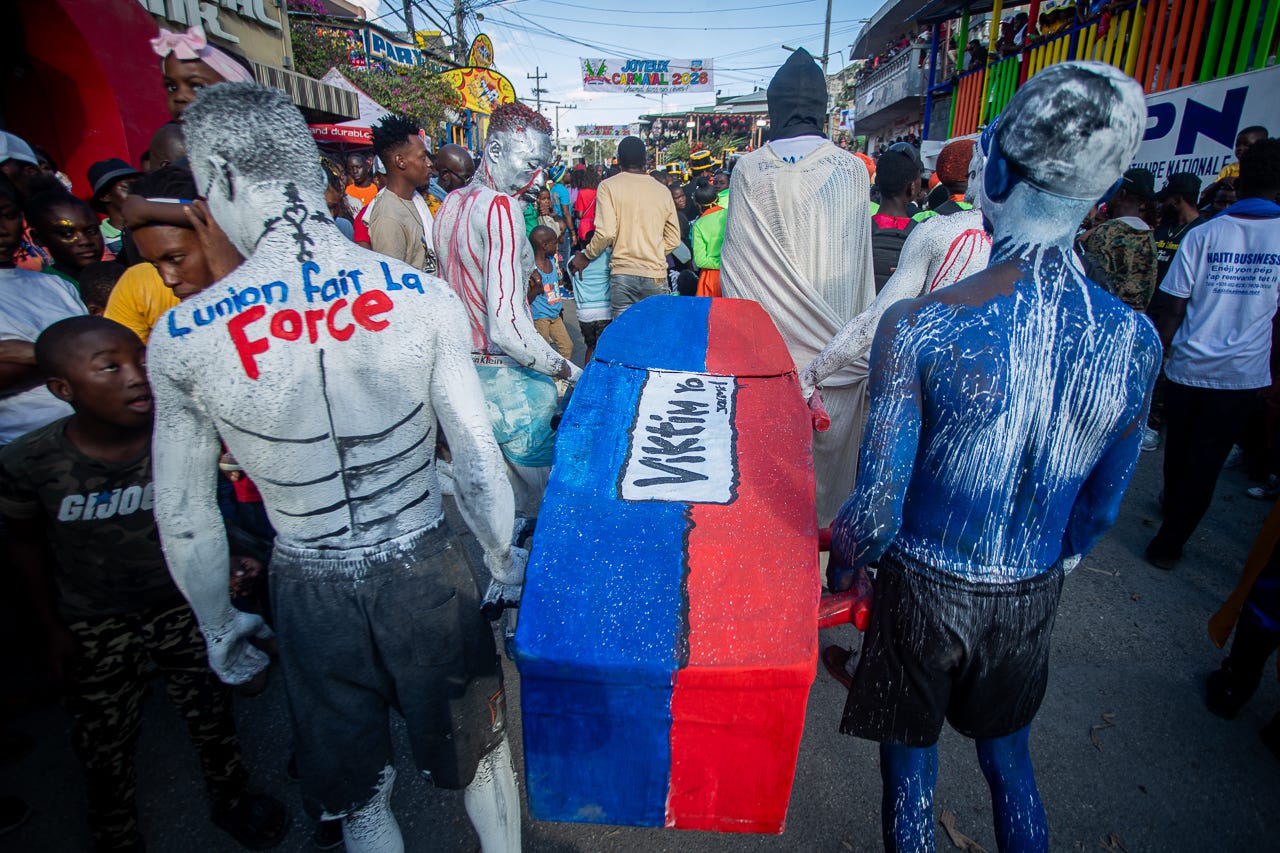


Finally, at a glance, there seemed that there were more participants in this year’s parade than in last year’s.


Music Video of the Week
Ou banm lanmou - Teddy Hashtag feat. Rutshelle Guillaume
Nothing is cuter or more reassuring than love — the theme celebrated in this new song by Teddy Hashtag, featuring Rutshelle Guillaume.
“Ou banm lanmou” (You give me love) is warming hearts across Haiti. Judging by the popularity of the music video, which has already received 3 million views, and the numerous TikTok covers, the song has been a hit just two two weeks after its release.
Port-au-Prince: Some Neighborhoods Liberated While Others Remain in Conflict
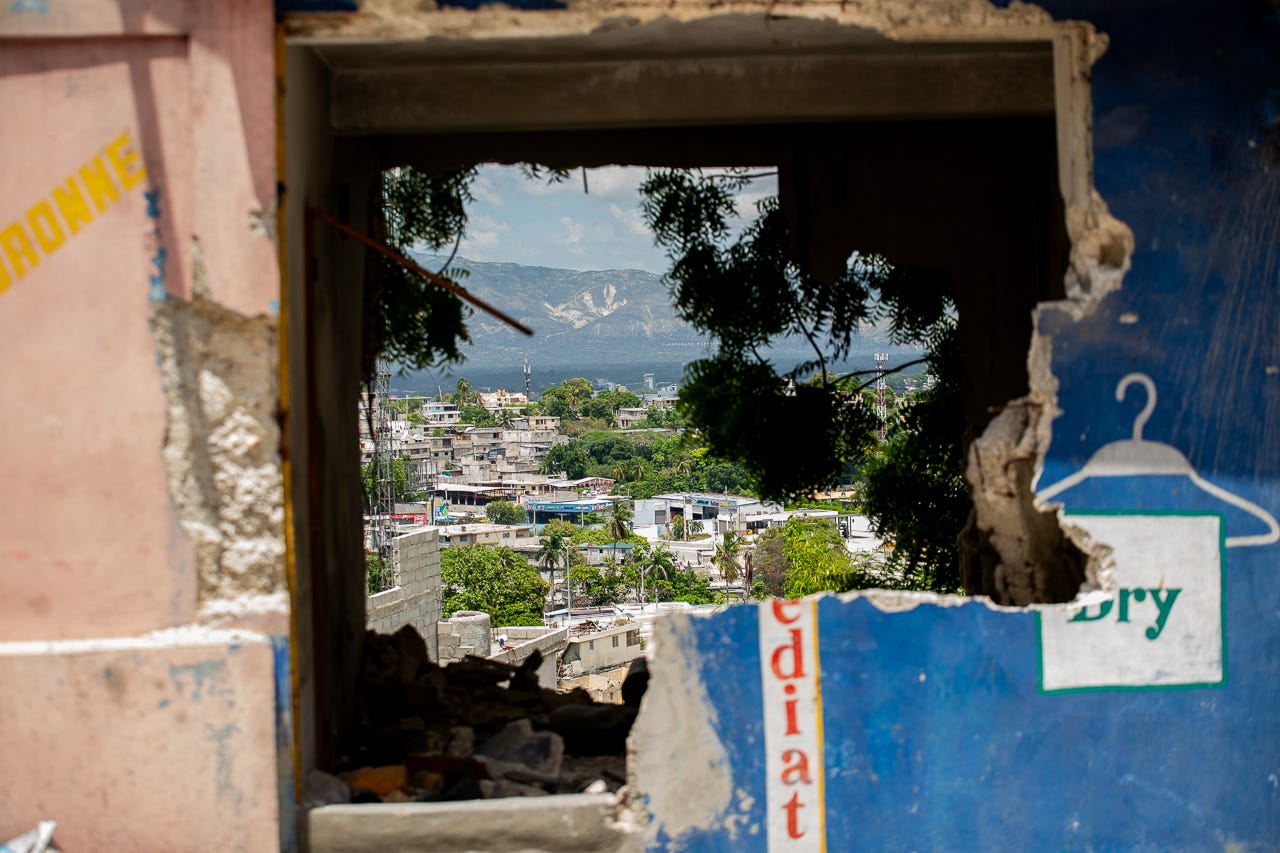
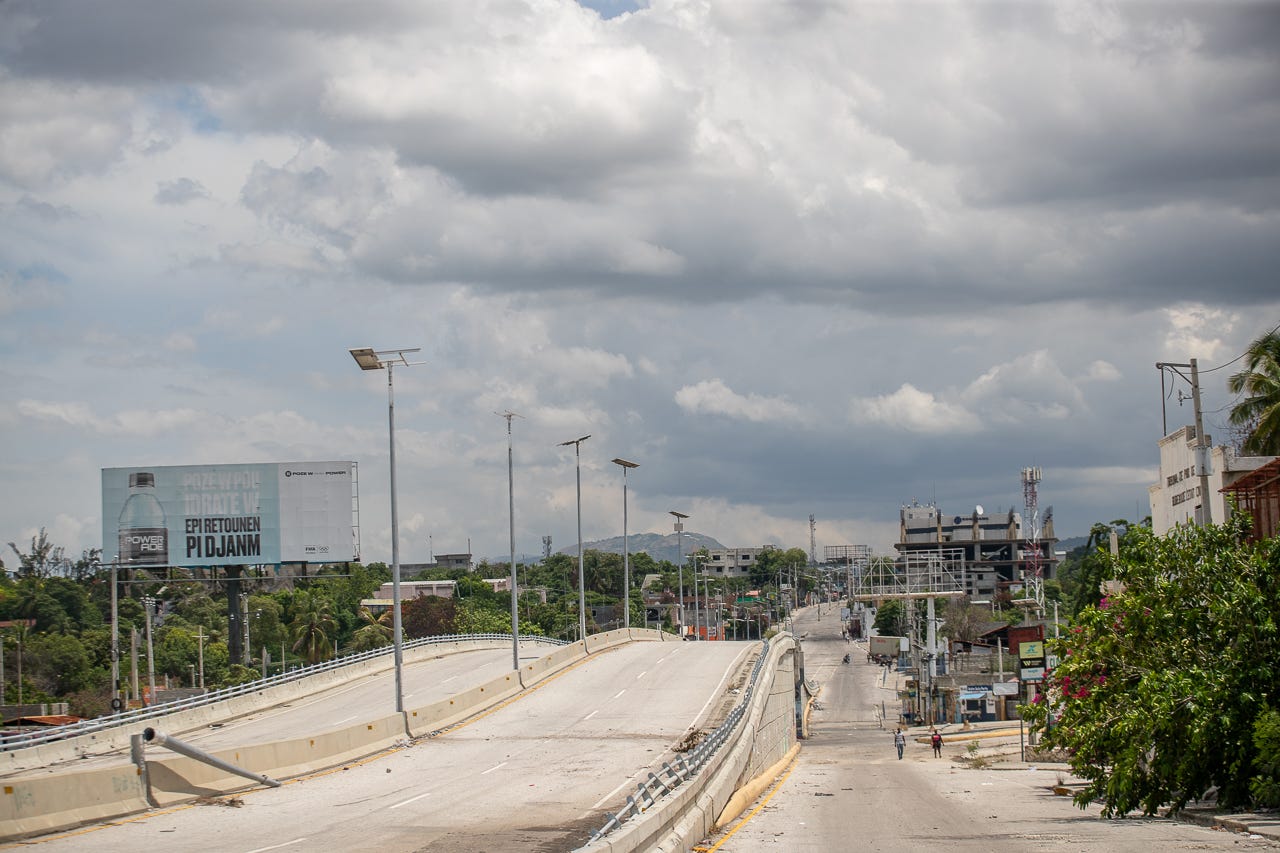
In recent weeks, Haitian authorities have liberated certain neighborhoods in Port-au-Prince from the control of armed criminal groups. In Solino, some residents have begun to return to their homes after spending several months in camps or with relatives.
Around the international airport, the police have regained control of certain key intersections and adjacent neighborhoods in recent days. This contrasts with previous years when the authorities reported few territorial gains. Last week, armed interventions were carried out by the police and their allies (the army and international intervention forces) were also carried out last week in Kenskoff, in the mountains above Pétion-Ville.
However, fighting is still ongoing in the city center, as well as in Portail Léogane and Bas-Peu-de-Chose. To reach Jacmel for the carnival, some members of the DÈYÈ MÒN ENFO team boarded an armored vehicle and traveled to the capital’s port. There, they boarded a ferry took them to Petit-Goâve.
DÈYÈ MÒN ENFO’s team
Photojournalists: Francillon Laguerre, Sonson Thelusma, Andoo Lafond, Milot Andris, Patrick Payin, Ketlain Difficile, Steeve Saint Fleur, Clarens Siffroy
Community manager: Steven Andris
Editorial board: Etienne Côté-Paluck, Jean Elie Fortiné, Jean-Paul Saint-Fleur
Interns: Wilky Andris, Donley Jean Simon
Special collaboration: Stéphanie Tourillon-Gingras, Mateo Fortin Lubin
Media partners: Centre à la Une, J-COM, Nord-Est Info
Institutional partners: Kay Fanm, Mouka.ht


How Does Your Contribution Help?
Your monthly (or yearly) support helps to finance the production and pay the salaries of the DÈYÈ MÒN ENFO staff in the communities of Cité-Soleil, Port-au-Prince and Cayes-Jacmel. In addition, donations are regularly distributed for medical expenses, school fees and other emergencies in these communities.
Press Reviews
Press Review - Performing Arts
Spectacle émouvant au Centre culturel Brésil-Haïti - Le Nouvelliste
Lakou : spectacle vibrant pour la renaissance d’Haïti par son histoire, sa culture et ses traditions - Le Nouvelliste
Press Review - Carnival
Carnaval régional à Fort-Liberté, la créativité et l’organisation au rendez-vous - Le Nouvelliste
Malgré le black-out total et les contraintes, le Cap-Haïtien célèbre un carnaval haut en couleur - Le Nouvelliste
Carnaval 2026 : la mairie des Gonaïves dresse un bilan encourageant - Le Nouvelliste
Lancement officiel du Carnaval des Cayes le dimanche 15 février - Radio Nationale d’Haïti
Premier jour gras à Jérémie : lancement officiel du Carnaval 2026 - JCom Haïti
Press Review - Music
Fanmi l pwotestan men yo pa t anpeche l chante vodou | Istwa Jehyna Sahyeir | Videyo - AyiboPost
« My World Is the Sun » : Dominique Fils-Aimé, instinctivement révolutionnaire - Le Devoir
Press Review - Gender and Women’s Rights
presented by KAY FANM
12 mars 2026 10:30 AM : « Situations et résistances des femmes en contexte de recul de l’État de droit. Cas de l’Afghanistan, du Soudan, de Haïti et du Guatemala »
Inscriptions : Table-ronde du CQFD au forum parallèle CSW70La détresse des hommes violés par les gangs en Haïti - Ayibopost
Des femmes violées par les gangs sont humiliées dans les camps de déplacés - Ayibopost
Fort-Liberté : Réinsertion professionnelle des femmes détenues - iciHaiti
Haïti-40 ans de la SOFA : Instabilité politique et violences entravent la défense des droits des femmes - AlterPresse
SOFA : 40 ans de résistance féministe et de transmission en Haïti - AlterPresse